

In short
- A classic Ukrainian pantry holds pickled cucumbers and tomatoes, marinated mushrooms, vegetable ikra, lecho, adjika, beans, plum jam, tomato juice and tomato paste.
- Most began as late-summer home preserves, zakrutky, opened through the winter; industrial versions follow the same recipes and flavours.
- Sour jars such as cucumbers, tomatoes and mushrooms are served as zakuska, while ikra, lecho and adjika work as spreads, sides and condiments.
- Tomato paste and tomato juice are working ingredients for borscht, holubtsi and stews; plum jam goes with syrnyky, crêpes and pastries.
- MADESA makes a jar for each of the ten, from a 480 g lecho to 3 kg pickles; every product page lists ingredients, standard and shelf life.
On this page
A Ukrainian pantry is built around about ten jars: pickled cucumbers and tomatoes, marinated mushrooms, vegetable ikra, lecho, adjika, beans, plum jam, tomato juice and tomato paste. Most of them began as home preserves made in late summer and opened through the winter, and the same products are now made industrially and sold well beyond Ukraine. Below is what each one is, how it is eaten and which of our jars corresponds to it.
Why a Ukrainian pantry looks the way it does
For generations, late summer in Ukraine has meant canning. From July to October households turn the harvest into jars, known colloquially as zakrutky, from the verb for screwing down a lid, and carry them to the cellar or to a cool shelf on the balcony. The logic is practical: preserve vegetables when they are plentiful and cheap, and open them in the months when fresh produce is scarce.
The result is a pantry with a recognisable shape: something sour, something hot, a vegetable spread, a ready vegetable dish, beans, a sweet jar, and the tomato products that soups and sauces depend on. Industrial production follows the same map, which is why Ukrainian shoppers abroad look for these products by name.
Pickles and marinades: cucumbers, tomatoes, mushrooms
Pickled cucumbers
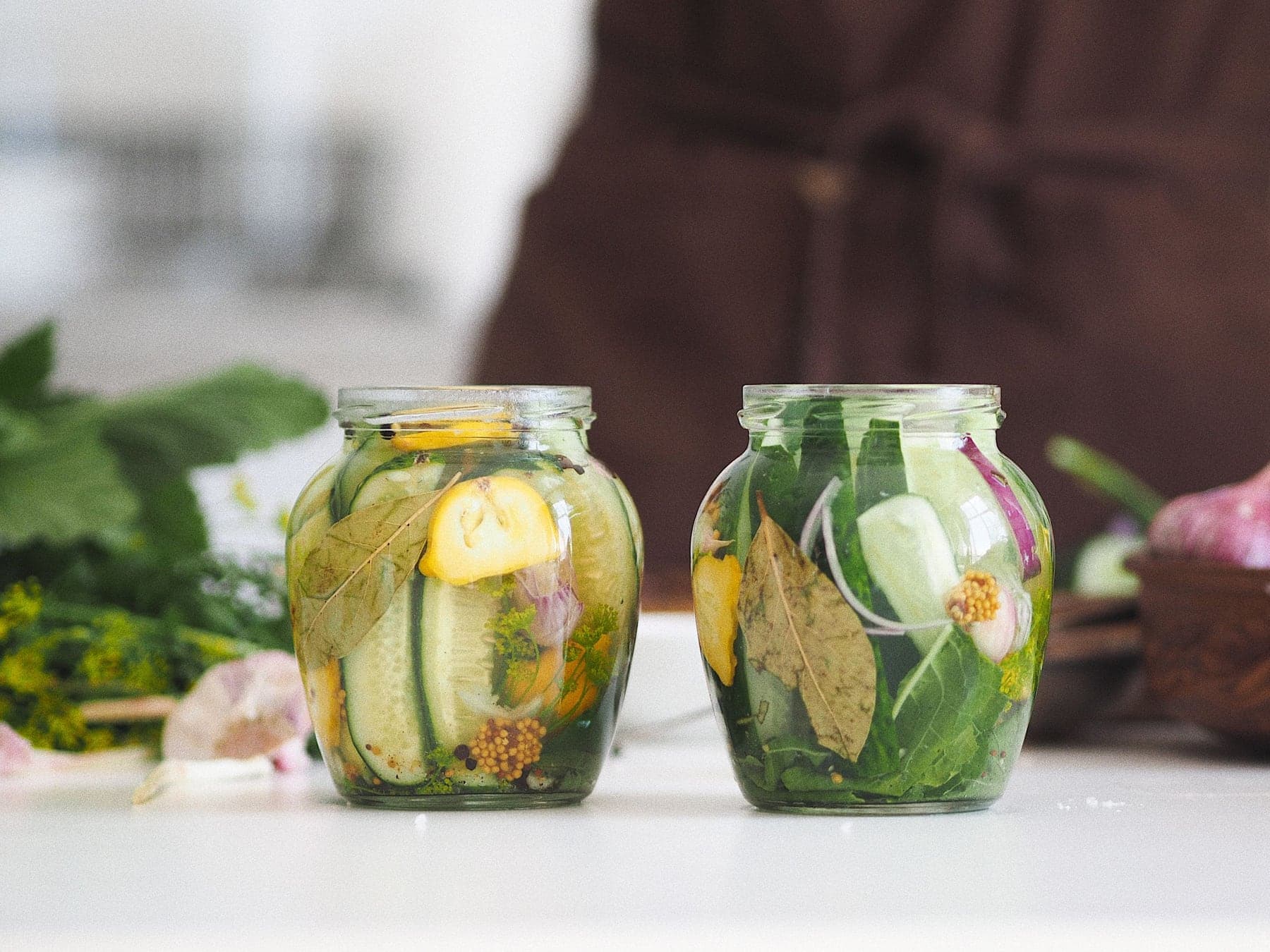
Cucumbers are the jar most Ukrainians think of first. The older tradition is fermentation in salt brine, in barrels or large jars, which gives the cloudy, savoury kvasheni cucumber; the vinegar-marinated version, crisp and with a clear brine, spread with home canning in glass jars. Both are eaten as zakuska, the cold starters that open a meal, with boiled potatoes and herring, and both are chopped into Olivier salad. Our pickled gherkins are the marinated kind: whole cucumbers (50 %) with dill, garlic, horseradish, black pepper, chilli and bay leaf, sterilised in a 3 kg jar. Our Olivier salad shows them in their best-known role.
Pickled tomatoes
Whole tomatoes preserved with dill, garlic and spices stand next to the cucumbers in many cellars. They are served whole as a cold side with potatoes or meat and on the zakuska plate, and in late autumn unripe green tomatoes are preserved the same way. Our pickled tomatoes with herbs contain tomatoes (50 %) with dill, garlic, black pepper, chilli and bay leaf, sterilised in a 3 kg jar.
Marinated mushrooms
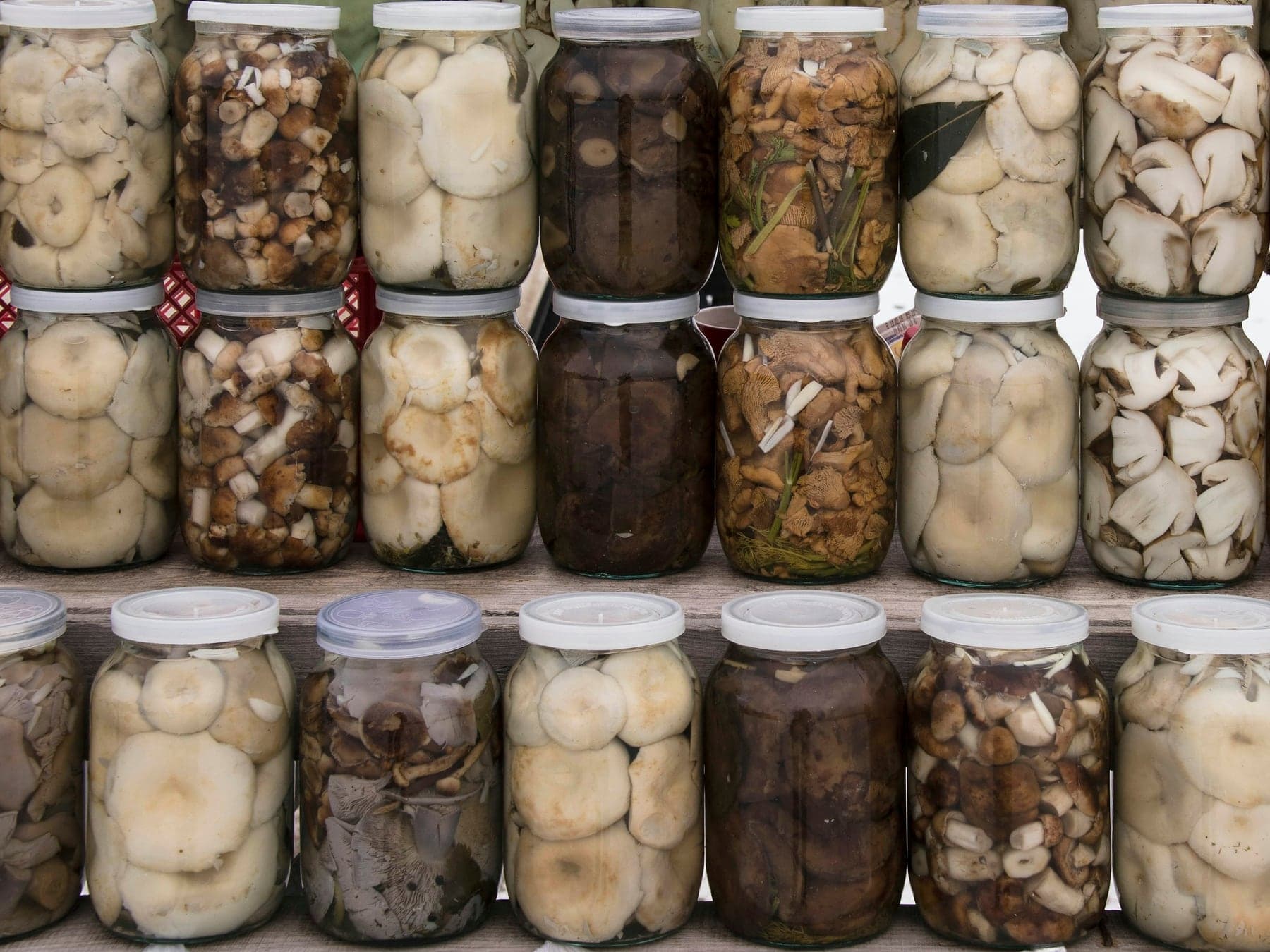
From the Carpathians to the forests of Polissia, mushroom picking is a favourite autumn pastime, and marinated mushrooms dressed with onion and sunflower oil are a regular sight on festive tables. A home-made jar may hold honey fungus or slippery jacks; industrial production uses cultivated button mushrooms, which give a consistent size and bite. Our marinated button mushrooms are whole champignons (70 %) in a marinade with garlic, allspice, black pepper and bay leaf, sterilised in a 3 kg jar. They are at their best next to hot potato deruny.
Spreads and vegetable dishes: ikra, lecho, adjika
Vegetable ikra
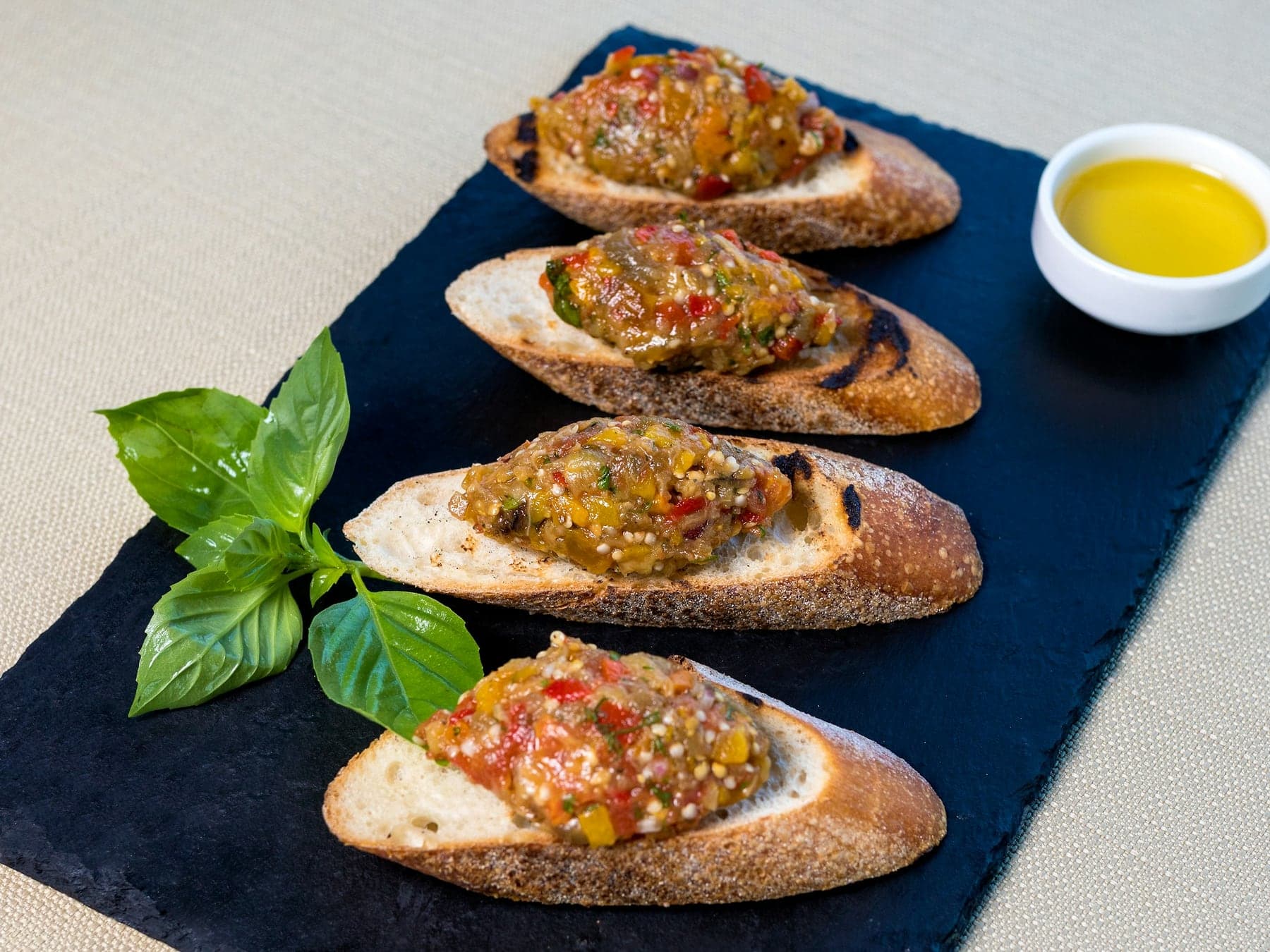
Ikra means caviar, and vegetable ikra is the affectionate name for vegetables stewed with onion, carrot and tomato until soft and spreadable. Courgette ikra is the everyday version and aubergine ikra a late-summer favourite; both are eaten cold on rye bread, as a side to potatoes or meat, or as part of a buffet. Our courgette ikra contains courgettes (76.3 %), tomato paste, sunflower oil, onions, carrots and herbs, bound with a little wheat flour, so gluten is declared; a sweet pepper ikra sits beside it in the range. How ikra differs from adjika and Balkan ajvar is explained in a separate article.
Lecho
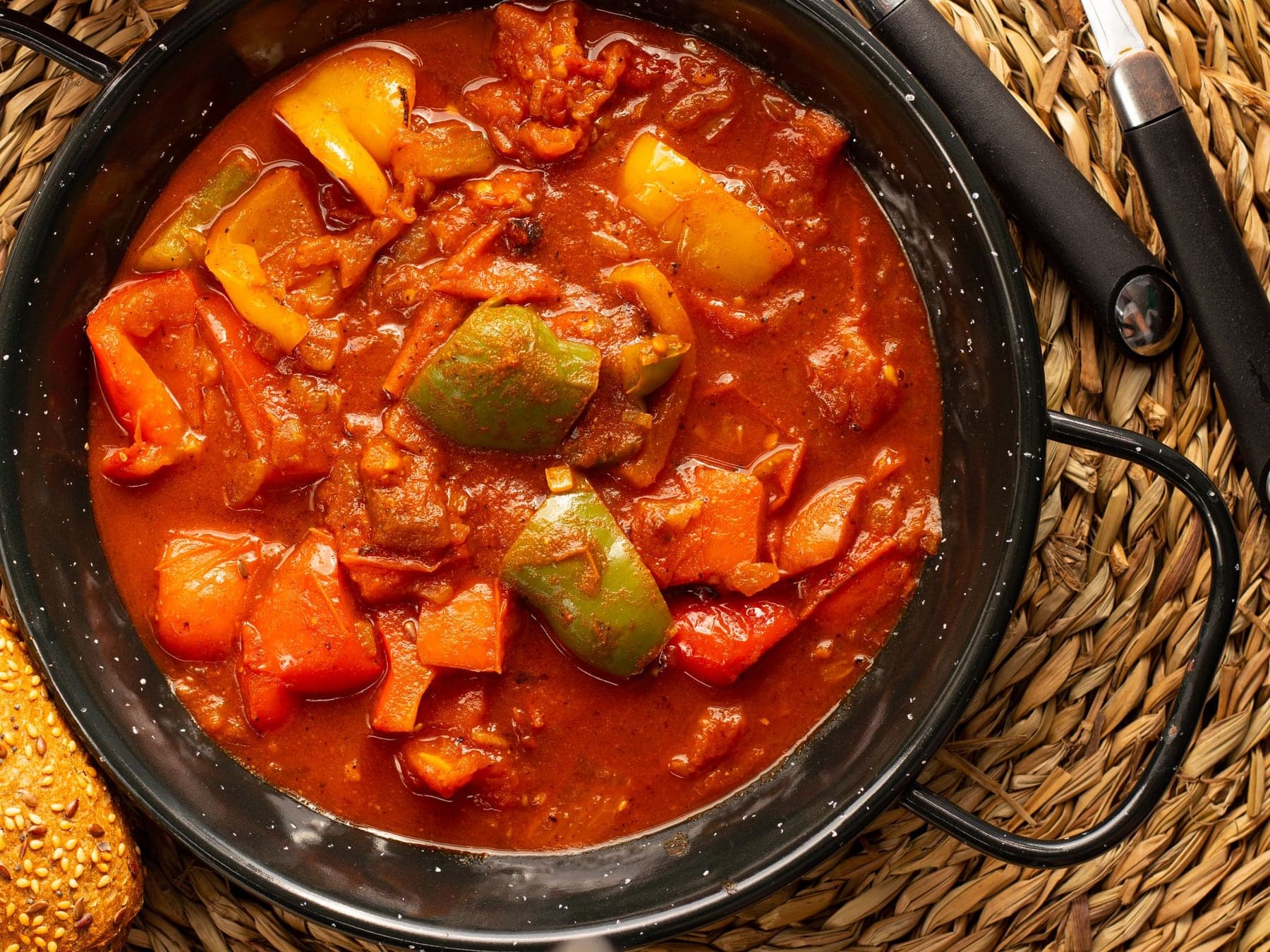
Lecho came from Hungary, where lecsó is a fresh stew, and in Ukraine became a sweet-sour preserve of pepper strips in tomato sauce, made by the jar in August and September. It is eaten cold as a side, warmed with sausages or eggs, or stirred into soups and stews. Our lecho is pepper-led, with sweet peppers at 50 % and a sauce of tomatoes or tomato paste, sterilised in a 480 g jar. The quickest introduction is eggs baked in lecho.
Adjika
Adjika came from the Caucasus as a fiery paste of chilli, garlic and herbs. In Ukrainian kitchens it became a tomato and pepper relish, usually hot and often sharpened with horseradish, served with meat, potatoes and bread. Our hot adjika is made from tomatoes (48 %) and sweet peppers (40 %) with horseradish, garlic and chilli, sterilised in a 480 g jar. The same flavour carries our aubergines in adjika, a ready vegetable dish.
Beans, tomato juice and tomato paste
Beans
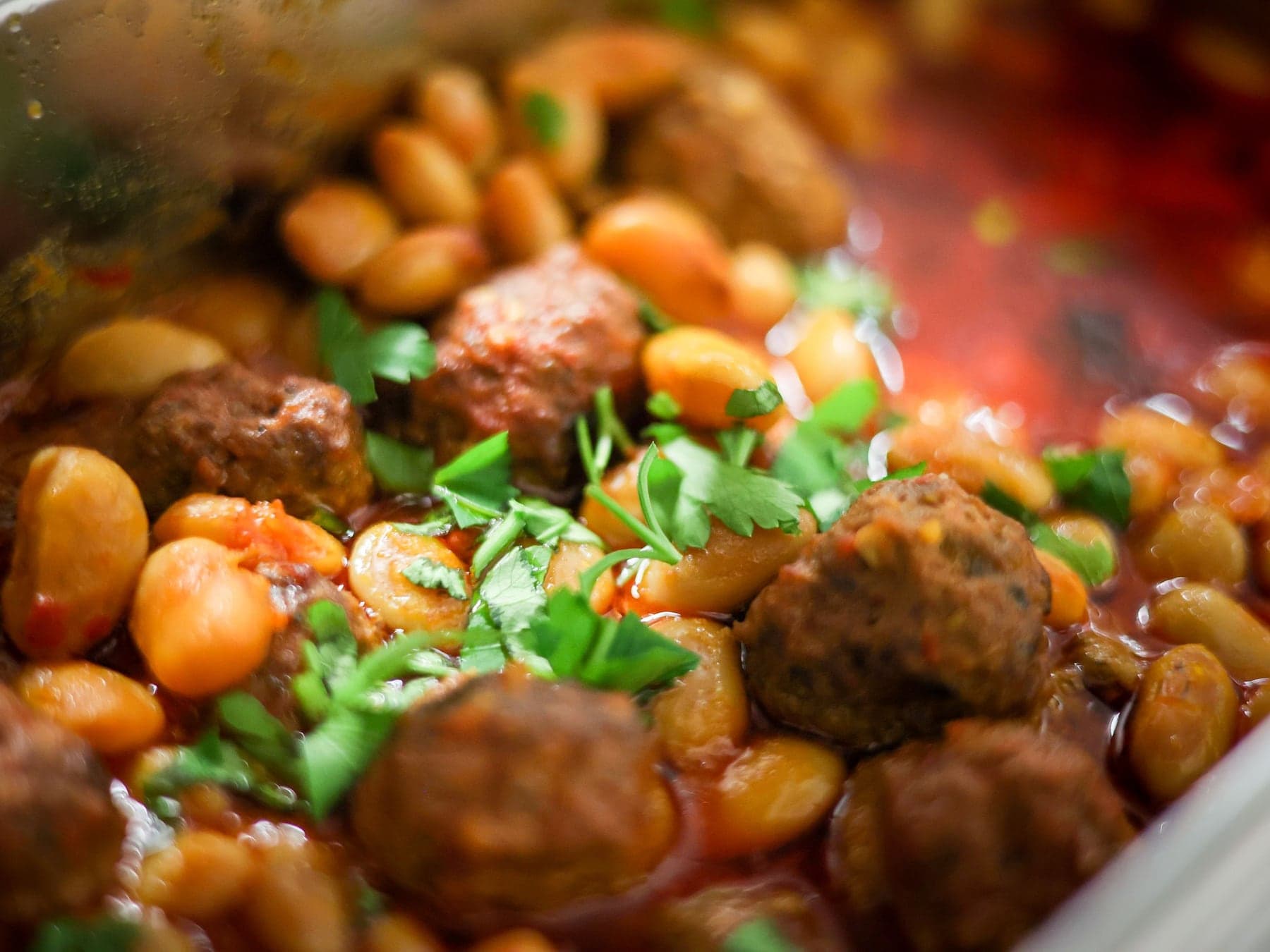
Beans have long been a staple of Ukrainian cooking: in borscht and salads, as a filling for varenyky, and as a meatless dish for the fasting days of the church calendar, including the Christmas Eve supper. In a jar they are usually cooked in tomato sauce and served hot with sausages or potatoes, or cold in salads. Our beans in tomato sauce contain 62 % beans in a sauce of tomato paste, sugar and salt, in a 700 g jar; the range also includes beans in a delicate sauce and beans with vegetables in tomato sauce.
Tomato juice
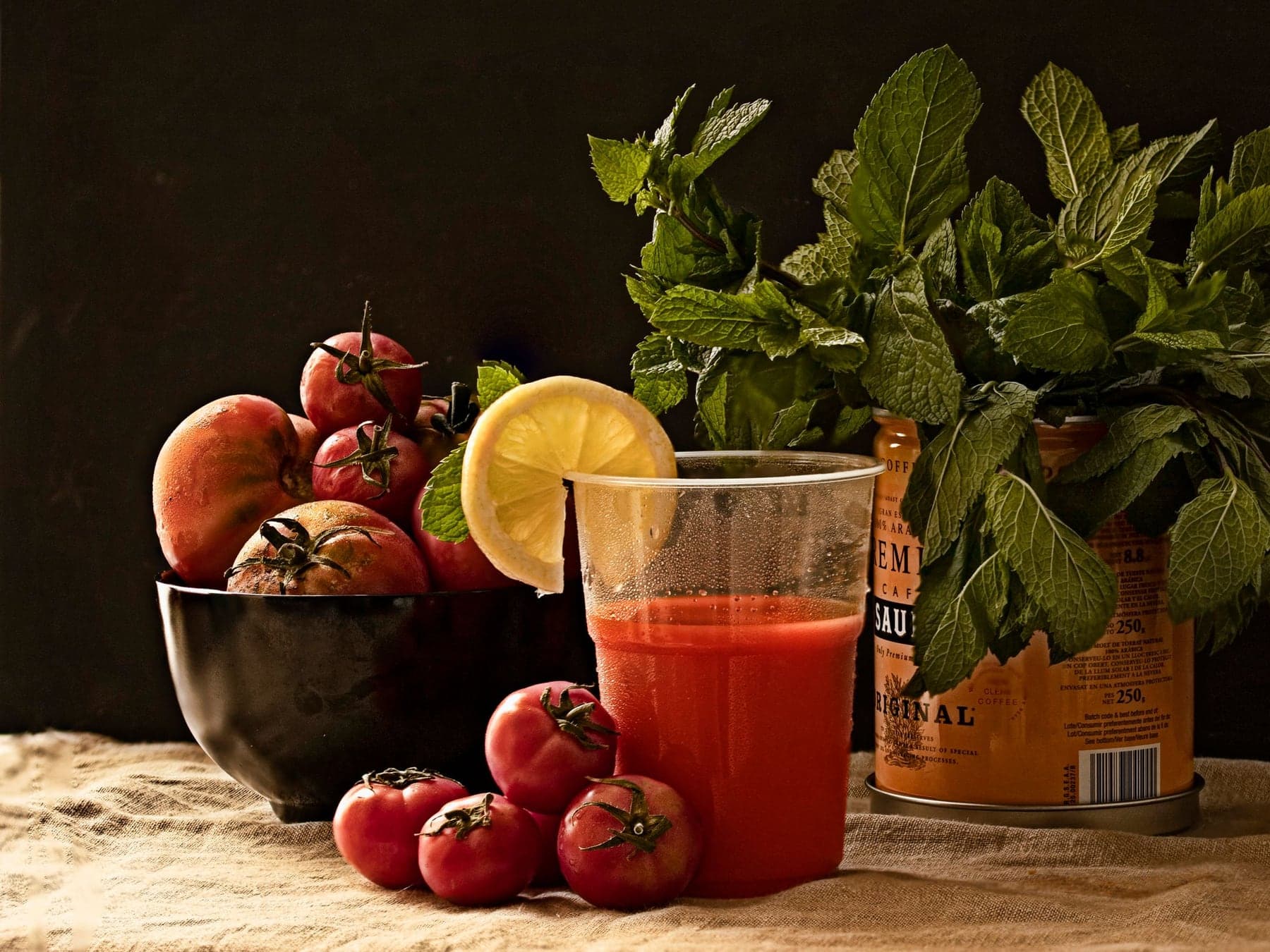
A glass of tomato juice with a pinch of salt is familiar from Ukrainian cafés and home tables, and some families still press their own in late summer. It is drunk on its own, used as a base for cold soups and sometimes poured over holubtsi, the cabbage rolls, before they go into the oven. Our tomato juice with salt is made from the juice of fresh tomatoes and salt only, with a pulp content of 14–20 %, sterilised in a 3 kg jar.
Tomato paste
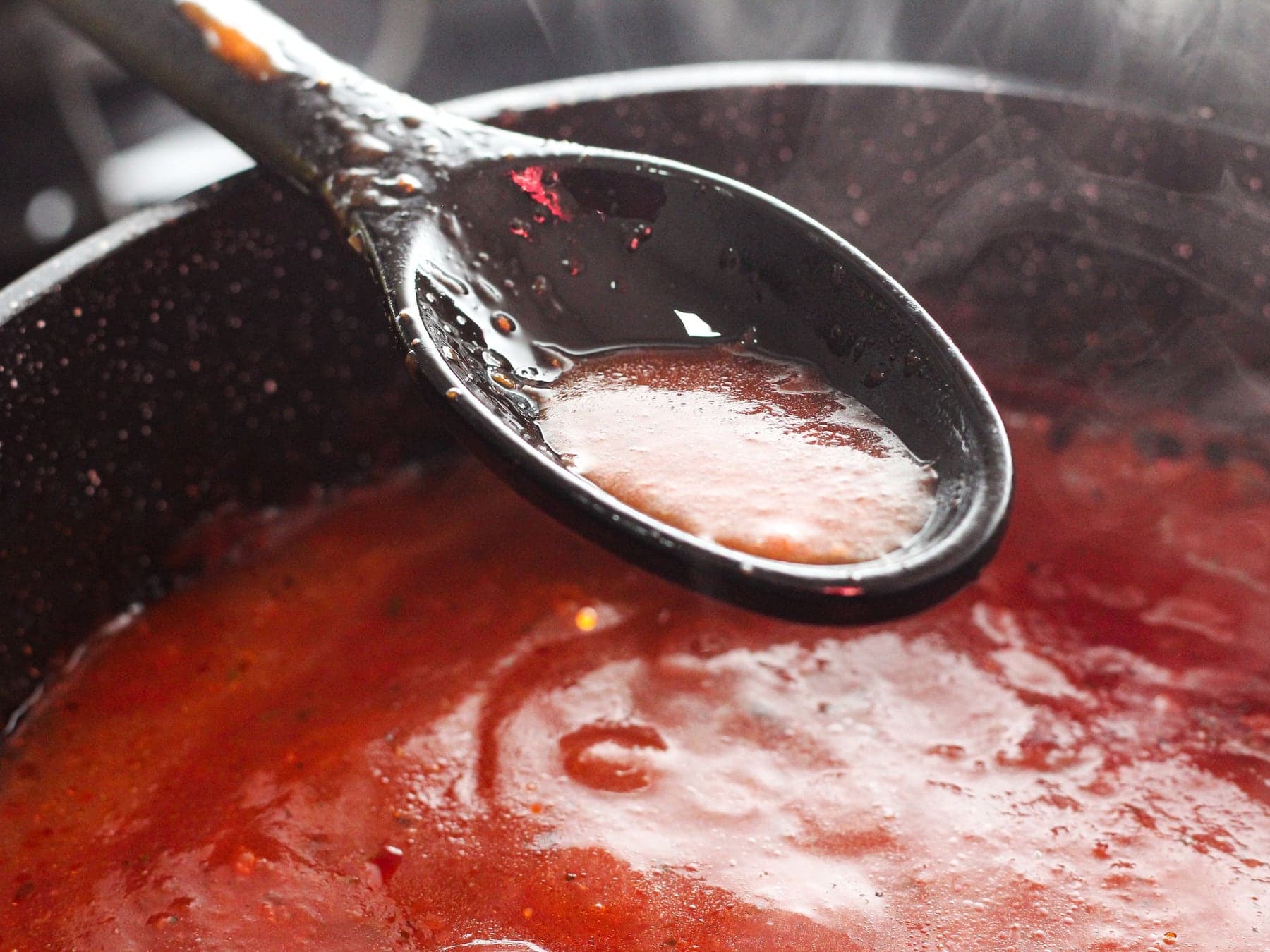
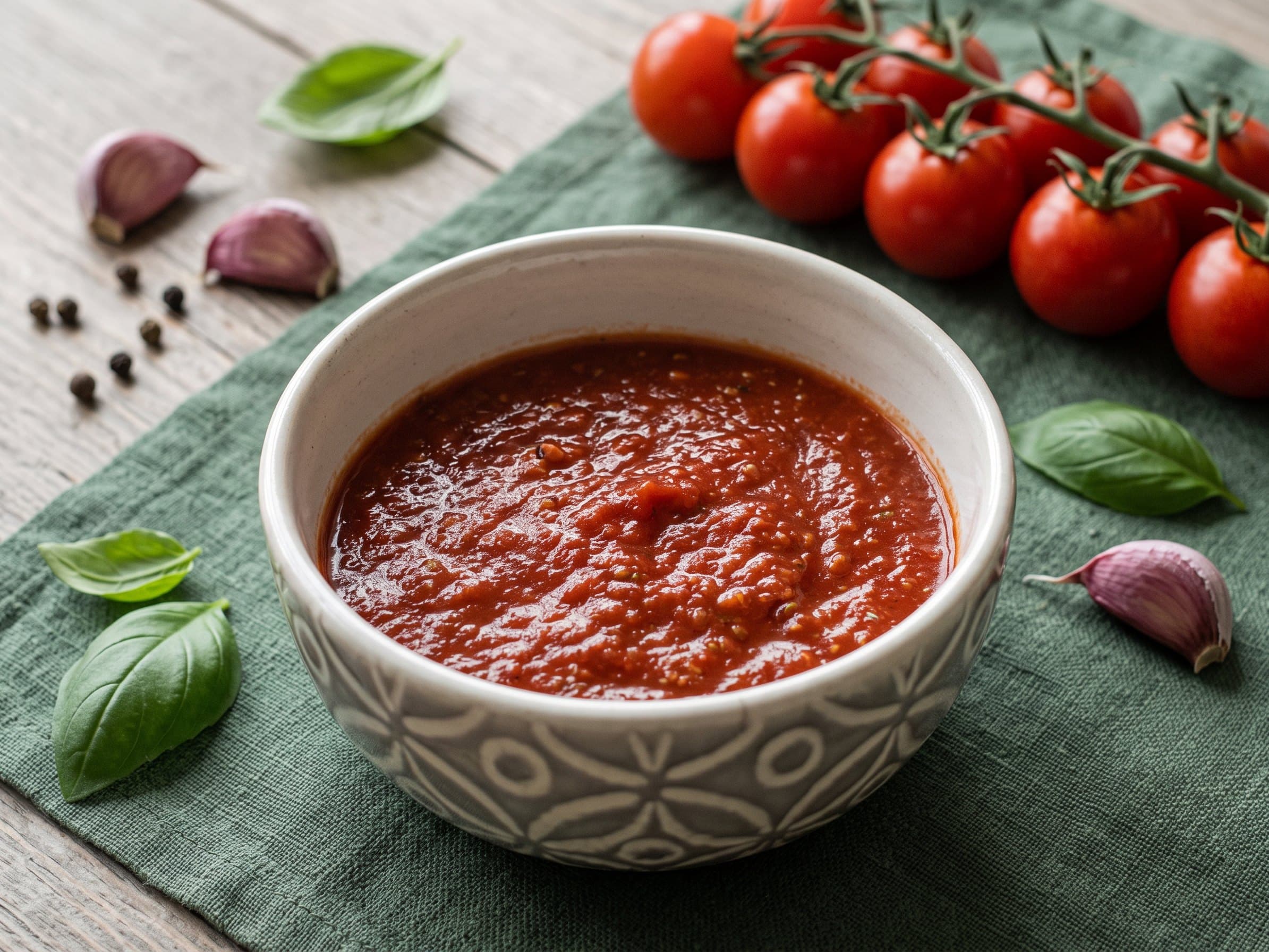
Tomato paste is the quiet foundation of the Ukrainian kitchen. It gives borscht its colour and depth, goes into the sauce for holubtsi and meatballs, and enriches stews and bean dishes; usually it is first fried briefly with onion and carrot in a zasmazhka. Our sterilised tomato paste is premium grade with 25 % dry matter and a single ingredient, tomatoes. It is made in Chyhyryn from Turkish tomato raw material and packed in a 500 g jar, with a pasteurised 5 kg pail for kitchens. Our Ukrainian borscht shows it at work.
Plum jam, the sweet jar
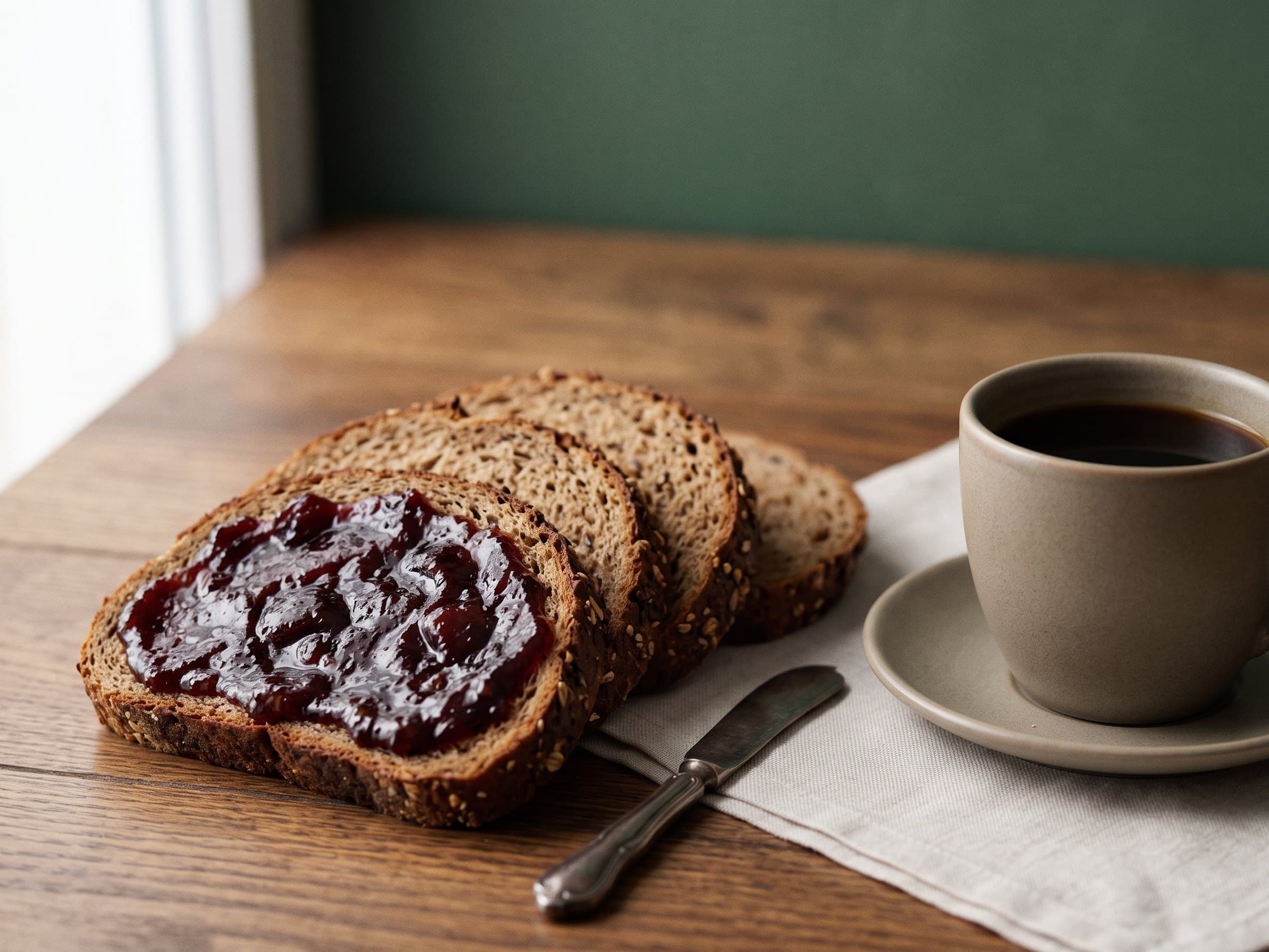
Every pantry keeps at least one sweet jar, and plums, ripe at the end of summer, fill many of them: as jam, as thick povydlo for baking, or as whole fruit in syrup. Plum jam is spread on bread, served with syrnyky and crêpes, and baked into pyrizhky. Our plum jam contains plums (70.9 %), white sugar and citric acid and nothing else, sterilised in a 1.2 kg jar; the classic pairing is syrnyky with plum jam. How jam differs from povydlo, varennia and confiture is the subject of our guide to jams.
The ten classics at a glance
| Classic | What it is | How it is eaten | Our jar |
|---|---|---|---|
| Pickled cucumbers | Fermented or vinegar-marinated cucumbers with dill | Zakuska, Olivier salad, with potatoes | Pickled gherkins, 3 kg |
| Pickled tomatoes | Whole tomatoes, fermented or marinated, with herbs | Cold side, zakuska plate | Pickled tomatoes with herbs, 3 kg |
| Marinated mushrooms | Mushrooms in a spiced vinegar marinade | With onion and oil, with deruny | Marinated button mushrooms, 3 kg |
| Vegetable ikra | Stewed vegetable spread | On rye bread, as a side | Courgette ikra and sweet pepper ikra, 650 g |
| Lecho | Pepper strips in tomato sauce | Cold as a side, with eggs or sausages | Lecho, 480 g |
| Adjika | Hot tomato and pepper relish | With meat, potatoes and bread | Hot adjika, 480 g |
| Beans | Beans cooked in a sauce | Hot with sausages, cold in salads | Beans in tomato sauce, 700 g |
| Tomato juice | Tomato juice with salt | As a drink, in cold soups and cooking | Tomato juice with salt, 3 kg |
| Tomato paste | Concentrated tomatoes | Borscht, sauces, stews | Tomato paste, 500 g jar and 5 kg pail |
| Plum jam | Plums set with sugar | Syrnyky, crêpes, pastries | Plum jam, 1.2 kg |
For buyers and kitchens outside Ukraine
For a retailer, these ten jars form the core of an Eastern European shelf: customers from Ukraine and neighbouring countries look for them by name, and curious shoppers find them through recipes. For a kitchen, they are ready to use straight from the jar, stored at ambient temperature until opened and consistent from batch to batch. A few points to note when you plan a range:
- Preservatives. Each of the ten jars linked above is made without added preservatives, as its product page states; the pasteurised 5 kg tomato paste is not, and its page says so.
- Allergens. Among these products, the courgette and sweet pepper ikras contain wheat flour and declare gluten; check each ingredient list for your allergen matrix.
- Formats. Retail jars range from 480 g to 1.2 kg; pickles, mushrooms and tomato juice come in 3 kg jars, and tomato paste also in a 5 kg pail for food service.
- Standards. Every product page shows the standard line (DSTU or TU U), shelf life and storage conditions needed for a specification.
To build a range around these classics or to supply a kitchen, request a quote and tell us which products and formats you need.
Frequently asked questions
What is zakuska in Ukrainian cuisine?
Zakuska means the cold starters and small dishes served at the start of a meal or alongside it: pickles, marinated mushrooms, vegetable ikra, herring, cured meats and bread. A generous zakuska spread traditionally opens a festive table, and most pantry jars end up on it.
Is aubergine ikra the same as baba ganoush?
No. Baba ganoush is a Levantine dip of roasted aubergine with tahini, lemon and garlic. Ukrainian aubergine ikra is stewed with onion, carrot, tomato and sunflower oil and contains no tahini, so it is sweeter, softer and closer to a vegetable dish than to a dip.
How hot is Ukrainian adjika?
Usually clearly hot, but milder than the original Caucasian paste, because tomatoes and sweet peppers make up most of the jar. The heat comes from chilli and, in many recipes, horseradish. Start with a teaspoon per portion and adjust to taste.
Can tomato juice replace tomato paste in borscht?
Not one for one. Paste is concentrated, ours has 25 % dry matter, and gives colour and depth in a small quantity, while juice adds volume and acidity. If you use juice, reduce the water in the recipe and simmer a little longer.
How should opened jars of pickles and vegetable preserves be stored?
Keep them in the refrigerator once opened, take product out with a clean utensil and keep pickles covered by their brine. Vegetable dishes such as lecho and ikra are best used within a few days; follow the guidance on each label.