

In short
- Large-format preserves pay off when a kitchen uses the product daily and finishes an opened pack within the period its own HACCP plan allows.
- MADESA packs five sterilised products without added preservatives in 3 kg glass jars, and pasteurised tomato paste in a 5 kg pail with handle.
- Cost portions from the declared share of the main ingredient: a 3 kg jar of gherkins at 50 % gives about 1.5 kg, mushrooms at 70 % about 2.1 kg.
- Once opened, decant into lidded containers, keep the product under its liquid, label it with the opening date and lot number, and keep it chilled.
- Using one product in several dishes is the surest way to empty a large jar before it reaches the open-pack limit set by your HACCP plan.
On this page
Large-format preserves, the 3 kg glass jar and the 5 kg pail, pay off in a kitchen that uses the product every day and empties an opened pack within the period its own HACCP plan allows. The saving is real: less packaging per portion, fewer jars to open, wash and recycle, fewer orders to place. It disappears as soon as half a jar is thrown away, so the decision depends less on the price per kilogram than on how fast the kitchen works through an opened pack.
Which large formats MADESA makes
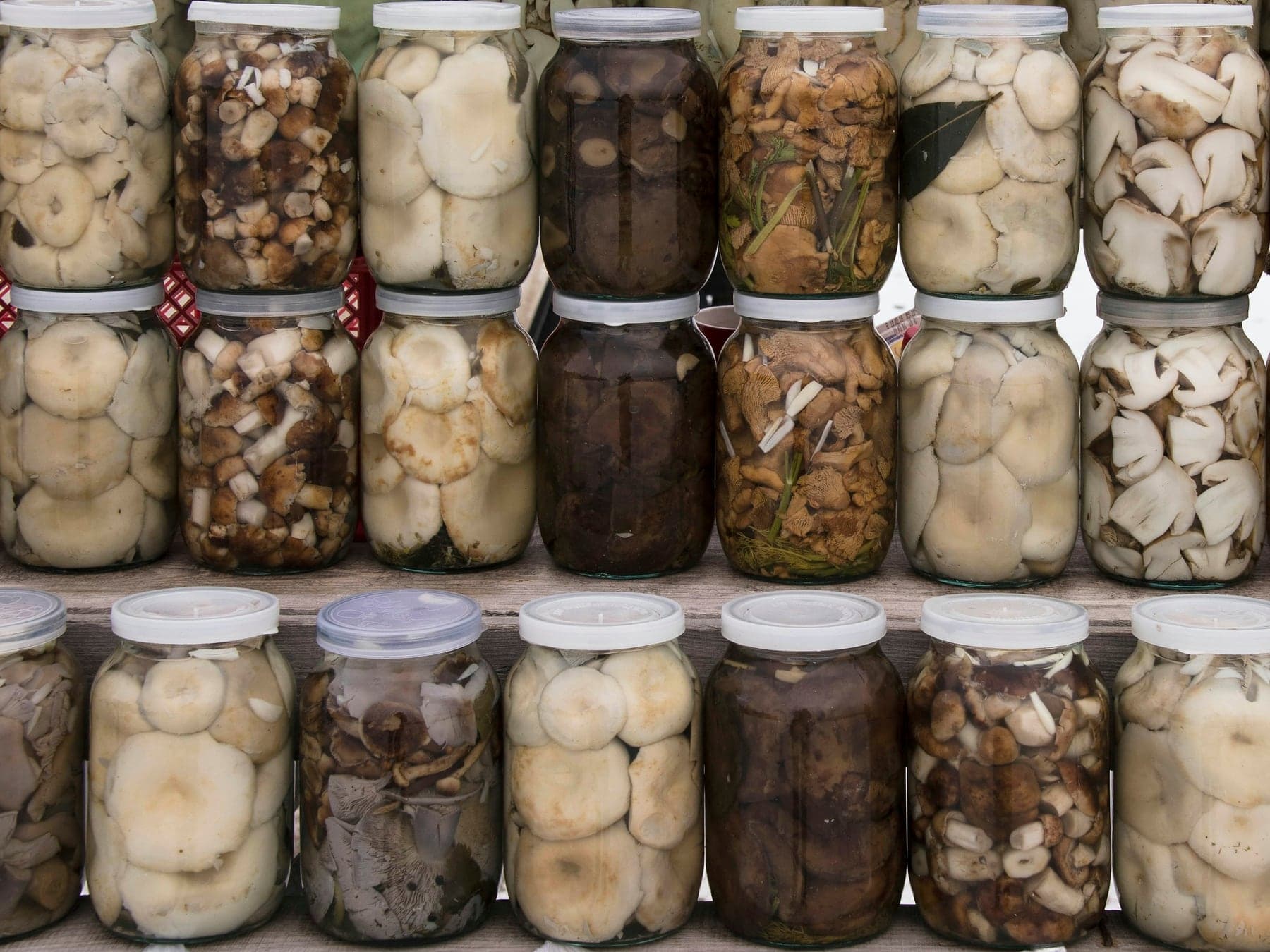
Six products in our range are packed for professional kitchens: five in 3 kg glass jars, sterilised and made without added preservatives, and tomato paste in a 5 kg plastic pail with handle.
| Product | Net weight | Key specification | Shelf life unopened | Pack |
|---|---|---|---|---|
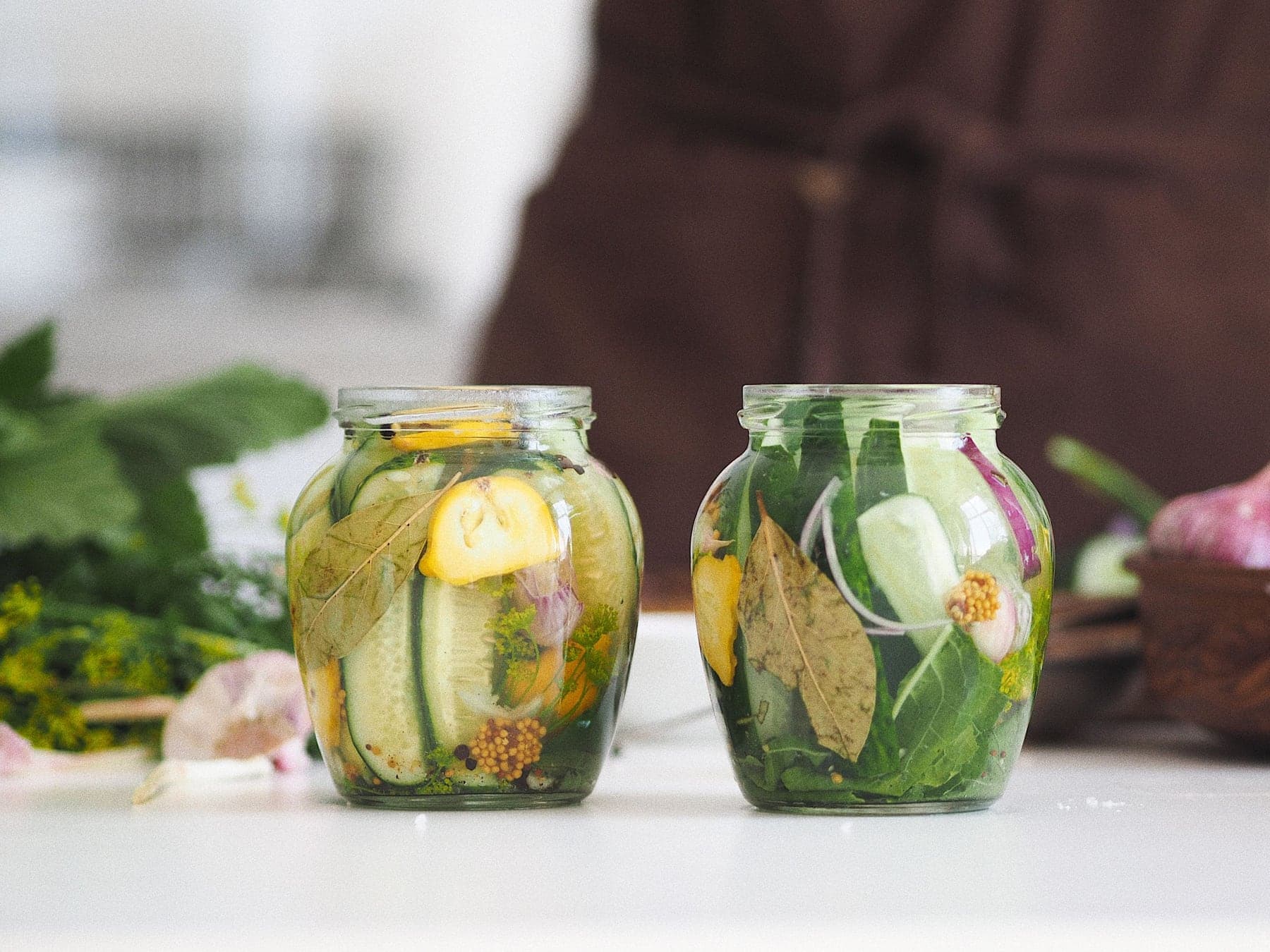
| Pickled gherkins | 3 kg | whole gherkins 50 % | 2 years | glass jar |
| Pickled tomatoes with herbs | 3 kg | tomatoes 50 % | 3 years | glass jar |
| Sliced pickled courgettes | 3 kg | courgettes 50 % | 2 years | glass jar |
| Marinated button mushrooms | 3 kg | whole button mushrooms 70 % | 2 years | glass jar |
| Tomato juice with salt | 3 kg | pulp content 14–20 % | 3 years | glass jar |
| Tomato paste, pasteurised | 5 kg | dry matter 25 % | 2 years | plastic pail with handle |
All six share one storage condition before opening: 0 °C to +25 °C at a relative humidity of no more than 75 %. The pasteurised tomato paste is made in Chyhyryn from Turkish tomato raw material and contains ascorbic acid, which its label declares as a preservative; the five products in 3 kg jars contain no added preservatives. All large packs are grouped in our food service and bulk collection.
How many portions does a 3 kg jar give?
A 3 kg jar does not hold 3 kg of vegetables: pickles and mushrooms sit in brine or marinade, and the label declares how much of the net weight is the vegetable itself. That share is the right starting point for costing. A practical method, worth carrying out once with the first jar of each product:
- Start from the net weight on the pack: 3 kg for the jars, 5 kg for the pail.
- Apply the declared share of the main ingredient: 50 % for pickled gherkins, tomatoes and courgettes, 70 % for mushrooms.
- Weigh what you actually lift out. Drain the first jar, weigh the product net of trim and note the figure.
- Divide by the portion weight on your recipe card.
- Divide the pack price by the number of portions. Compare formats on cost per portion, never on price per jar.
The figures below are approximate planning values, not label declarations; your own portion sizes and trim will move them.
| Product and pack | Approx. usable product | Example portion | Approx. portions per pack |
|---|---|---|---|
| Pickled gherkins, 3 kg | about 1.5 kg | 30–50 g as a garnish or side | 30–50 |
| Pickled tomatoes with herbs, 3 kg | about 1.5 kg | 60–80 g on a starter plate | 18–25 |
| Sliced pickled courgettes, 3 kg | about 1.5 kg | 40–60 g as a side | 25–37 |
| Marinated button mushrooms, 3 kg | about 2.1 kg | 50–70 g as a starter or topping | 30–42 |
| Tomato juice with salt, 3 kg | just under 3 litres | 200 ml glass | about 14 |
| Tomato paste, pasteurised, 5 kg | 5 kg of paste | 1.5 kg per batch of pizza sauce | about 130 pizzas of 30 cm |
The last line comes from our own pizza sauce recipe, in which 1.5 kg of paste makes about 4.7 kg of sauce, enough for roughly 40 pizzas of 30 cm. The brine is not counted, but vinegar brine from gherkins or courgettes seasons dressings and marinades well if handled like any opened product.
Opening a large pack: the HACCP routine
A sealed, sterilised jar is shelf-stable. Once the seal is broken, its contents are an ordinary perishable food, and a large pack stays open longer than a small one. Large formats therefore need a written routine, built on the hazard analysis principles of the Codex Alimentarius that underpin every kitchen's HACCP plan. Three hazards matter: microbial growth after opening, cross-contamination from utensils and hands, and, with glass, physical contamination.
Before and during opening:
- Check the pack. Date not passed, lid concave with the safety button down, no bulging or leaks, pail lid and seal intact. A pack that fails any check is set aside, not opened.
- Clean the outside. Dust from the dry store sits on the lid and runs into the product when you pour.
- Open on a clear surface, away from food in preparation, with a firm grip: a full 3 kg jar is heavy and slippery when wet.
- Look and smell. Normal colour and smell, clear brine for vinegar pickles. Foam, a sharp yeasty smell, slime or mould mean the product is discarded, never tasted to check.
Decant, cover, label
Whatever is not used in the current service goes into clean, lidded, food-grade containers, with the product kept under its own liquid. Each container is labelled with:
- the product name;
- the date of opening, and the time if you work in shifts;
- the use-by date set by your HACCP plan;
- the lot number from the original jar or pail, so that traceability survives decanting;
- the initials of the person who decanted it.
None of these six products declares an allergen in its ingredient list. If you turn one into something else, a tartare sauce with mustard and egg for example, the new preparation needs its own allergen information.
Keep the cold chain unbroken
Decanted containers go straight into chilled storage at the temperature your plan specifies. On the line, work from a small mise en place container and return the main one to the refrigerator between uses. Never top up a container in use with product from a new jar: two opening dates in one container make the label meaningless.
The pail and the jar
Take tomato paste out with a clean, dry scoop, never with a ladle that has been in a pot, then smooth the surface, close the lid and return the pail to chilled storage. Where consumption is slow, portion the pail on the day of opening into small containers, each used up in one go; where your plan allows, these portions can be frozen. Glass belongs in the kitchen's glass policy: store 3 kg jars low, carry them with two hands, record every breakage and discard any open food near a broken jar.
Menu ideas that use a jar before it tires
The surest way to finish an opened pack in time is to use it in more than one dish:
- Pickled gherkins: burgers at lunch, tartare sauce for fish at dinner, potato salad, Olivier salad.
- Pickled tomatoes with herbs: starter plates, grilled meat and shashlik, a chopped relish.
- Sliced pickled courgettes: antipasti, salad bars, a tart foil for pork or duck.
- Marinated button mushrooms: breakfast omelettes, pizza and focaccia, potato pancakes with sour cream, warm salads.
- Tomato juice with salt: breakfast buffet, bar, gazpacho, a base for soups and braises.
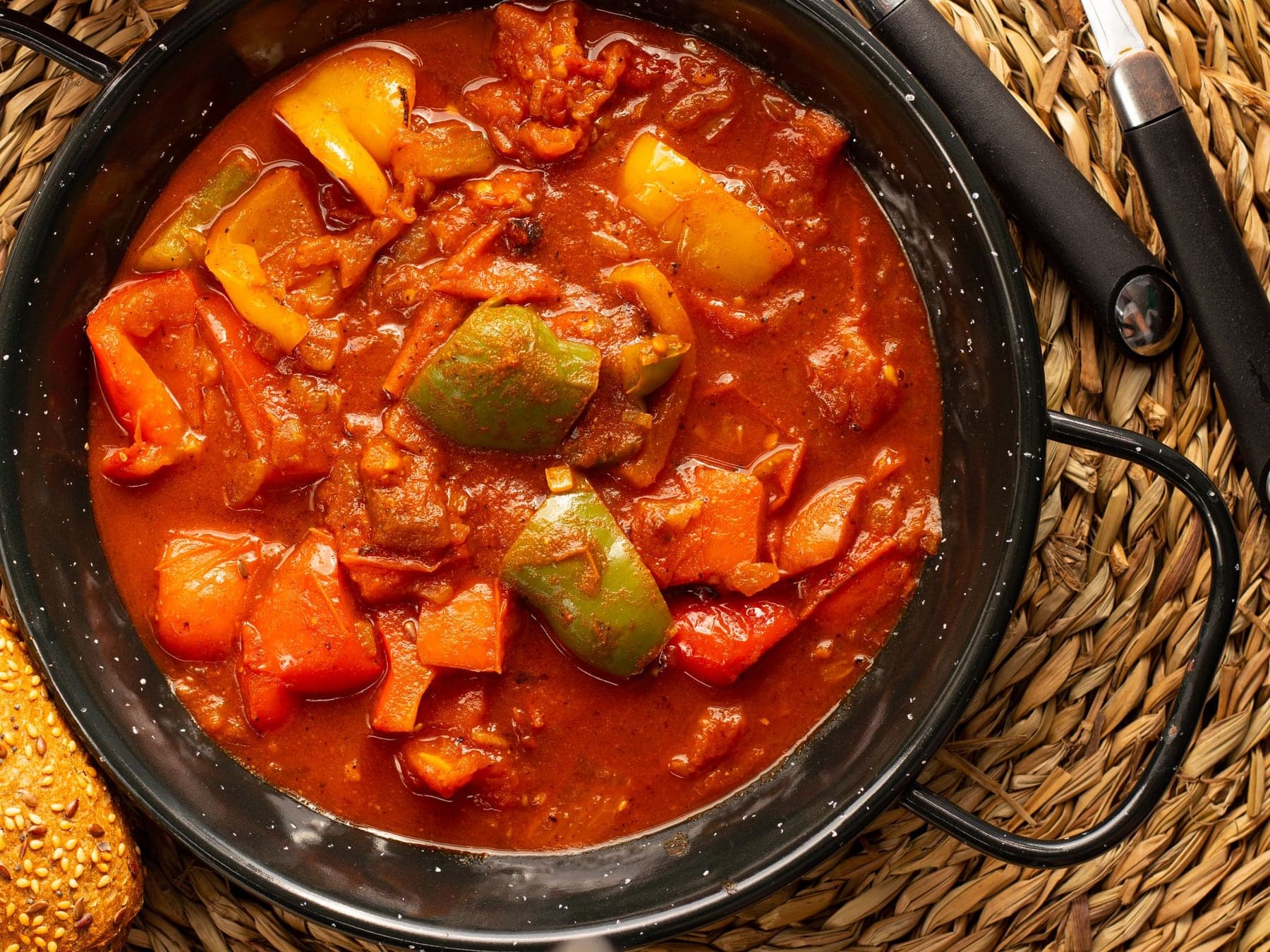
- Pasteurised tomato paste: pizza sauce, borscht, goulash, glazes, batch-made house sauces.
A jar of gherkins that serves the burger at noon and the tartare sauce at night empties twice as fast as one that serves only the burger.
When the large format makes sense
The decision comes down to one calculation: usable product per pack against what your kitchen uses within the open-pack period its HACCP plan allows. If your plan sets, for example, three days for opened mushrooms, a 3 kg jar with about 2.1 kg of usable mushrooms suits a kitchen that uses around 700 g a day. At 200 g a day, smaller jars cost more per kilogram but less per portion actually served.
Large formats are usually the right choice when:
- the product appears in daily dishes, ideally in several;
- an opened pack is reliably finished within the period your plan sets;
- there is dry-store space at 0 °C to +25 °C and refrigerator space for decanted containers;
- staff are trained to decant, label and rotate.
They are the wrong choice for a product used once a week, for a single seasonal dish, or where refrigerator space is already the bottleneck. Many kitchens run a mix: 3 kg jars for the pickles that go out every service, smaller jars for everything occasional. Storage before opening and the comparison of glass and pail are covered in Glass Jar or Pail?
For the food service buyer
Start from your recipe cards: the weekly usage of each product in grams, and the open-pack period your HACCP plan sets. With those two figures we can tell you which of our formats fits each line. Specifications, carton counts and pallet configurations are available on request, with copies of our ISO 22000 and ISO 9001 certificates for your supplier file. Send your list through the quote form for an answer specific to your products and volumes.
Frequently asked questions
How long does an opened 3 kg jar of pickles keep?
As long as your HACCP plan allows for that product, which is usually a matter of days, not weeks. The date on the jar applies only while it is sealed. After opening, keep the pickles chilled, covered and under their brine, and mark the opening date on the container.
Can an opened product stay in its 3 kg jar in the fridge?
Yes, if it will be used up within a day or two and the jar stands safely on a low shelf. For longer use, decanting into smaller lidded containers is better: the bulk is opened less often, the containers take less space, and each one carries its own label.
How much tomato sauce does a 5 kg pail of tomato paste make?
Roughly 20 kg of tomato base, if a 25 % paste is diluted with about three parts water by weight. In our pizza sauce recipe, which adds oil and seasoning, a full pail is enough for around 130 pizzas of 30 cm.
Do MADESA's large-format products contain preservatives?
The five products in 3 kg glass jars do not: they are sterilised and made without added preservatives. The pasteurised tomato paste in the 5 kg pail contains ascorbic acid, which its label declares as a preservative.
Can the brine from a 3 kg jar be reused to pickle fresh vegetables?
It is better not to. Fresh vegetables dilute the acidity of a brine that has already balanced with the first contents, and an opened brine may carry microorganisms from utensils and hands, so the new pickle would be an uncontrolled product. Use the brine to season dressings and marinades instead, within the same period as the opened product.