

In short
- Black and green olives grow on the same tree: green olives are picked before they ripen, naturally black olives when they are ripe.
- Many evenly black pitted olives were harvested green or turning colour, then darkened by oxidation, with an iron salt added to fix the colour.
- Every table olive has to be cured to remove the bitter compound oleuropein, by lye treatment, slow brine curing or dry salting.
- The ingredient list is the reliable guide: an iron salt marks oxidised black olives, and acids, salt and any preservative are listed individually.
- MADESA's pitted black and green olives are made in Türkiye, packed in Chyhyryn, sold in 1 kg glass jars and contain a preservative.
On this page
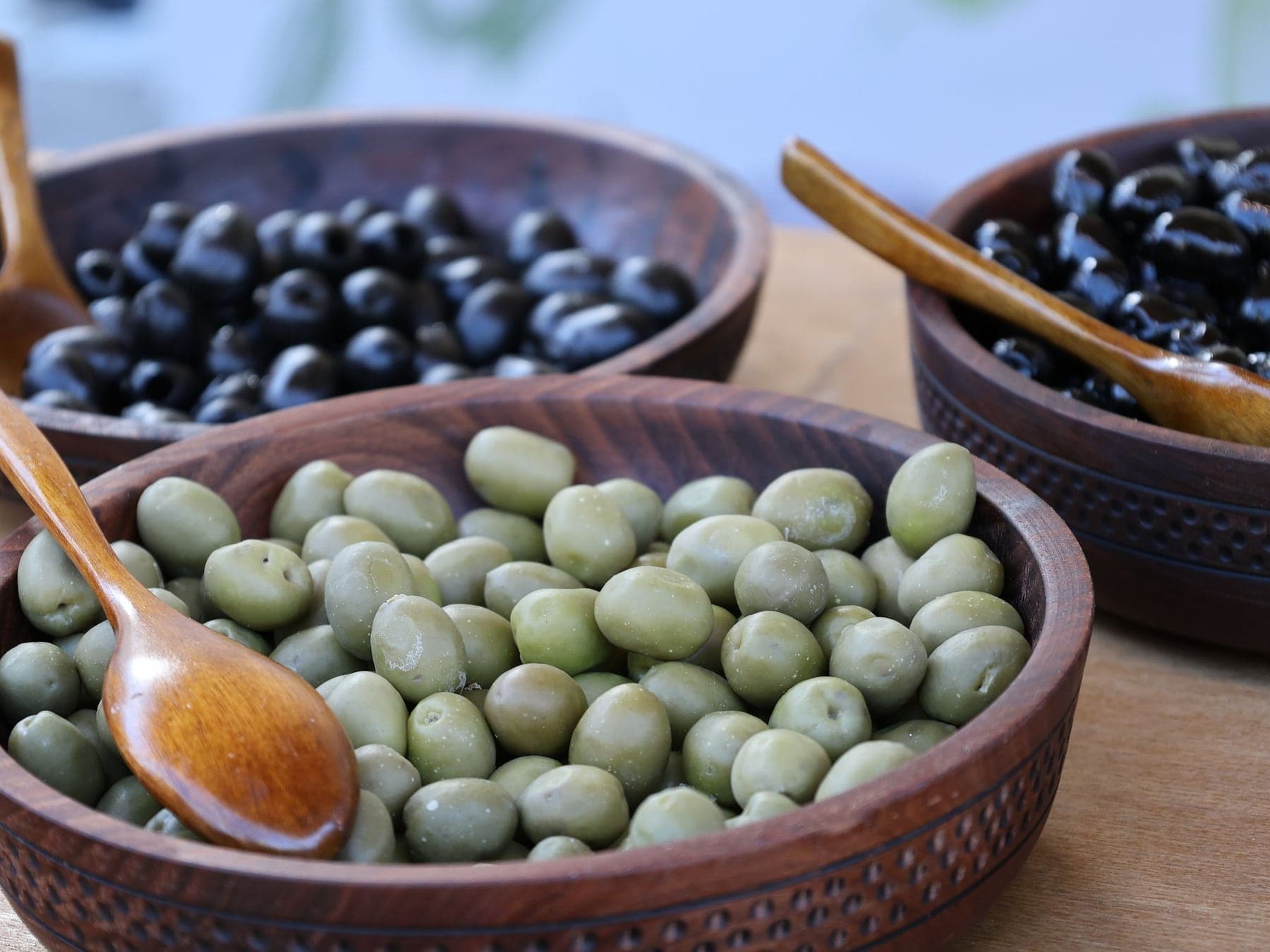
Black and green olives grow on the same tree. Green olives are picked before they ripen, naturally black olives stay on the tree until they are ripe, and many of the evenly jet-black olives sold pitted in jars and cans started out green and were darkened by oxidation, with an iron salt added to fix the colour. Ripeness and curing decide what you taste, and the ingredient list tells you which kind you are holding.
One tree, three stages of ripeness
All table olives are the fruit of the olive tree, Olea europaea. As the fruit matures it changes colour: from green to straw-yellow, then through pink, violet and chestnut tones, and finally to purple-black. The Codex Alimentarius standard for table olives distinguishes three colour types: green olives, olives turning colour, and black olives.
Colour goes hand in hand with texture and flavour. A green olive picked at full size is firm and carries the most bitterness to remove; a ripe olive is softer, oilier and more aromatic.
A note on language. In Ukrainian, and across much of the region's food trade, black olives are usually called maslyny and green olives olyvky, although botanically they are the same fruit. That is why our Ukrainian product names use two different words for what an English label simply calls olives.
Why a fresh olive cannot be eaten
An olive straight from the tree is intensely bitter. The cause is oleuropein, a phenolic compound in the flesh, and every table olive has to be cured to remove or break down most of it. Three methods dominate:
- Alkaline treatment. A dilute lye solution penetrates the flesh and breaks down oleuropein within hours. The olives are then washed thoroughly to remove the alkali and placed in brine.
- Natural brine curing. The olives go straight into brine and lose their bitterness slowly, over months, as the bitter compounds diffuse out and the natural microflora ferments the fruit. A trace of bitterness remains and is part of the character.
- Dry salting. Ripe olives are layered with salt, which draws out water and bitterness. The result is wrinkled, intense and comparatively dry.
How green and black olives are made
Green olives
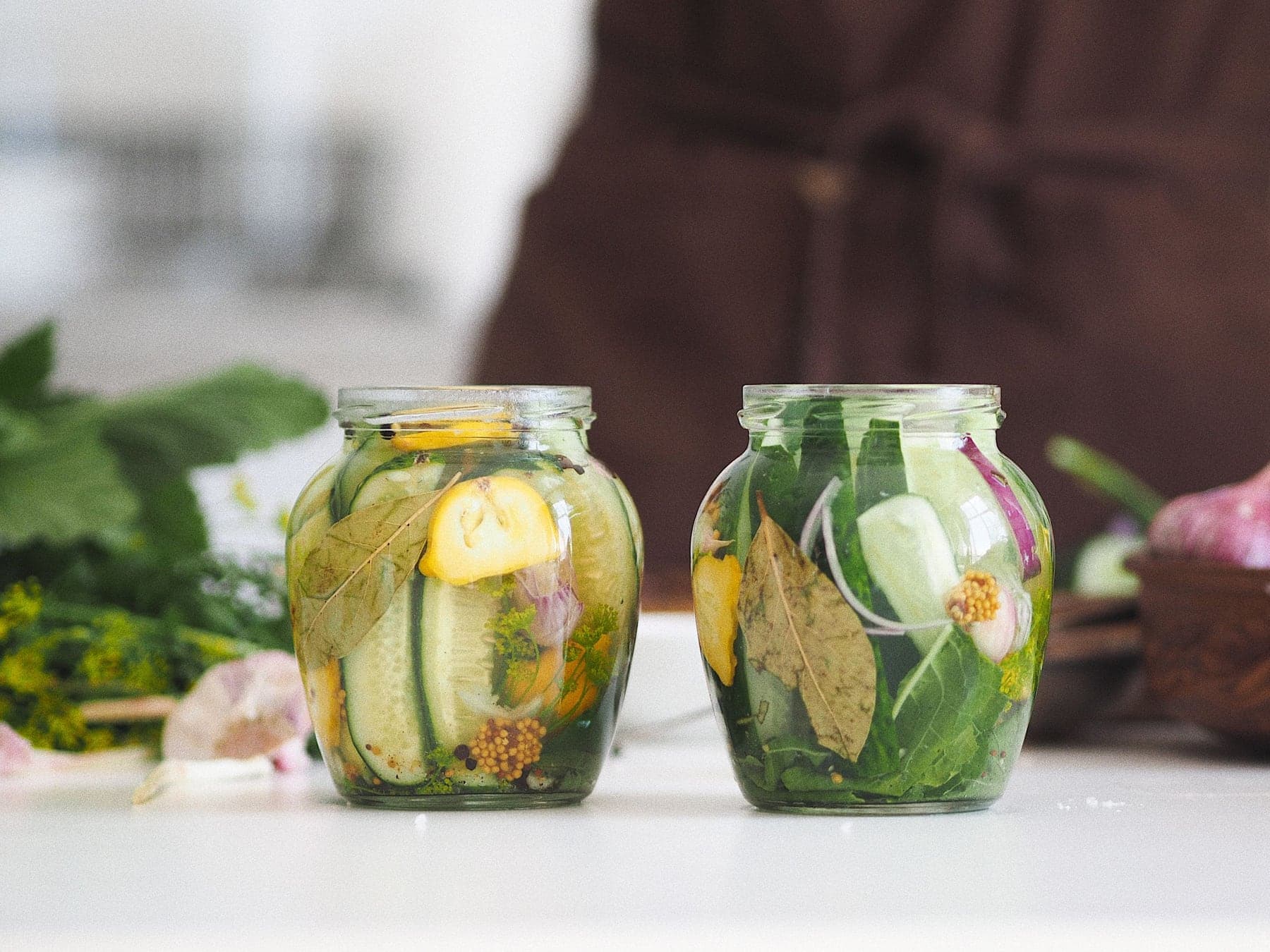
Green olives are harvested at full size but before the colour turns, while the flesh is still firm. In the most widespread method they are treated with lye, washed and then placed in brine, where lactic acid bacteria ferment them over weeks to months. Fermentation lowers the pH and builds flavour: the familiar salty, gently sour, slightly bitter and fruity taste of a good green olive. It is the same lactic fermentation that makes barrel cucumbers sour, described in Pickled or Fermented? Inside a Jar of Gherkins.
After curing, green olives are sorted, often pitted or stuffed, and packed in fresh brine. Acids such as lactic or citric acid adjust the acidity, and calcium chloride is commonly added to keep the flesh firm.
Naturally black olives
Naturally black olives are harvested ripe and cured in brine or with dry salt. Their colour is never quite uniform: dark brown, violet and black in the same jar. The flesh is softer, the flavour deeper and often winey, with a hint of bitterness. They are often sold with the stone, because soft ripe flesh is harder to pit cleanly by machine than firm flesh.
Black olives darkened by oxidation
The third style starts with olives picked green or turning colour, which are kept in brine or an acidified solution. They then go through a series of short lye treatments while air is bubbled through the liquid. Oxygen darkens the phenolic compounds in skin and flesh, and the olive turns black from the outside in. An iron salt, typically ferrous gluconate or ferrous lactate, is added to stabilise the colour, and the olives are packed in brine and heat-treated.
The result is the evenly black olive found on pizzas and in salads around the world: mild, almost without bitterness, tender but intact, with a colour that holds in the oven. It is a recognised, standardised style, not an imitation, but it is a different product from a naturally black olive, and only the label tells the two apart reliably.
| Green | Naturally black | Black by oxidation | |
|---|---|---|---|
| Harvest | full size, before colour change | ripe | green or turning colour |
| Curing | lye, then lactic fermentation in brine | slow brine curing or dry salt | brine storage, lye with aeration |
| Colour | green to yellow-green | uneven, brown to black | uniform jet black |
| Flavour | salty, sour, slightly bitter | deep, fruity, some bitterness | mild, little bitterness |
| Texture | firm | soft | tender |
| Label clue | lactic or citric acid | no colour stabiliser | an iron salt in the list |
Reading the label on a jar of olives
Four lines on the label tell you most of what you need:
- The ingredient list. An iron salt marks the colour-stabilised style. Acids, salt, a firming agent and, in many products, a preservative such as potassium sorbate are declared individually.
- The share of olives. Where it is declared, the percentage of olives in the net weight shows how much fruit you are paying for.
- The form. Whole, pitted, sliced or stuffed. Each has its own price per usable kilogram.
- The origin. The place where the olives were produced and the place where they were packed may differ.
Our two olive products, for example, are made in Türkiye and packed at our site in Chyhyryn. Both come in 1 kg glass jars, both keep for two years unopened at 0 °C to +25 °C and a relative humidity of no more than 75 %, and, unlike most of our range, both contain a preservative, declared on the label. The ingredients, exactly as on the label:
- Pitted black olives: pitted black olives (50%), water, salt, ferrous gluconate E585, acidity regulator (acetic acid), stabiliser (calcium chloride), preservative (potassium sorbate).
- Pitted green olives: water, pitted green olives, salt, acidity regulators (lactic acid, citric acid), stabiliser (calcium chloride), preservative (potassium sorbate).
Read against the table above, the iron salt in the first list is the marker of the colour-stabilised style.
Pitted olives in a professional kitchen
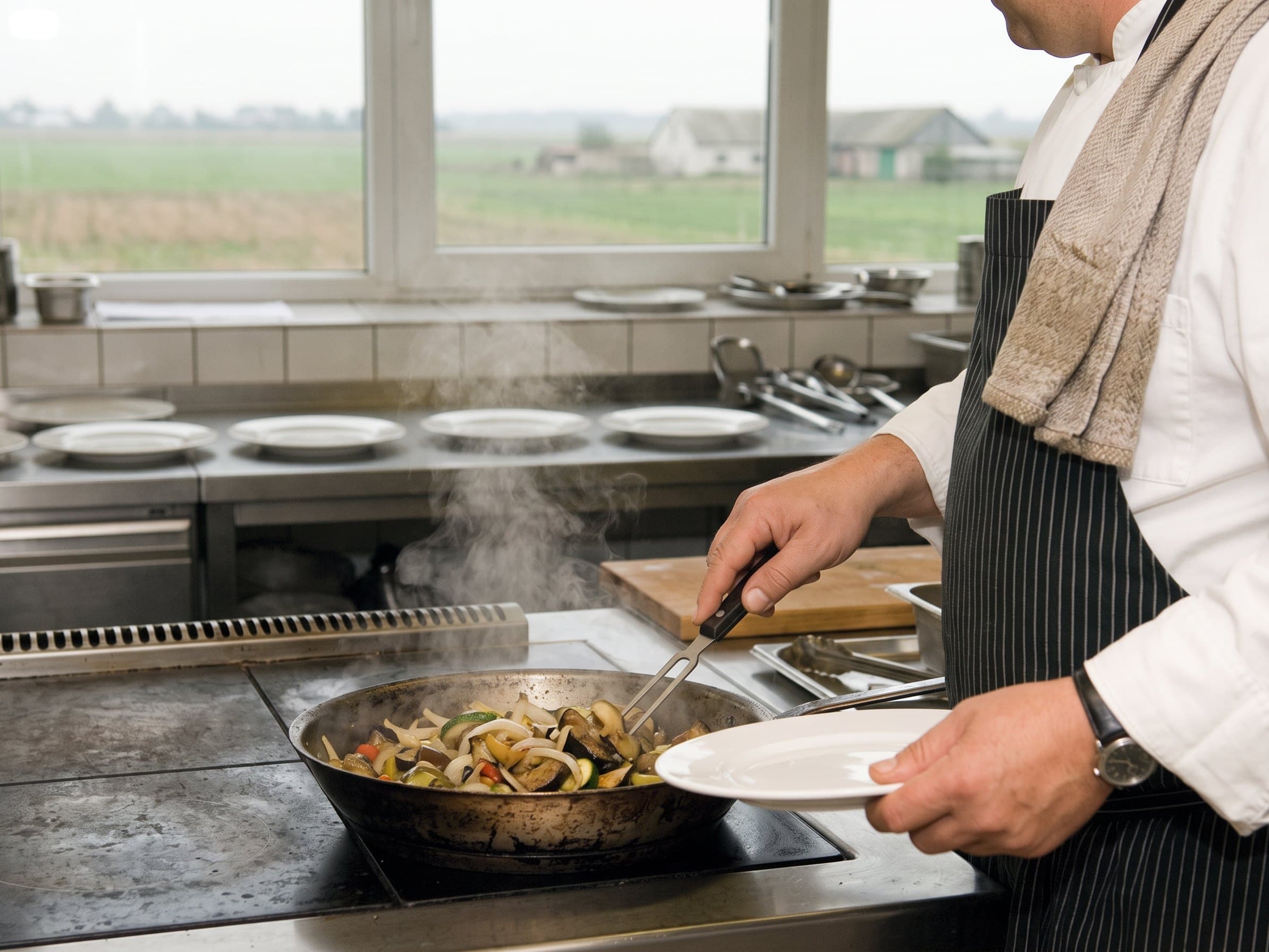
Pitted olives save time wherever olives are cooked, sliced or blended: pizza, pasta sauces, tapenade, salads, bread doughs. Every gram in the jar is flesh, portions are consistent, and nobody has to pit olives by hand before service.
There are trade-offs. Without its stone an olive absorbs brine faster, so its flavour depends more on the packing brine and its texture is a little softer than that of a whole olive. Mechanical pitting is reliable but not flawless, so in dishes for children it is good practice to look out for an occasional stone fragment.
A few kitchen habits:
- Drain well and pat dry before baking. Wet olives steam rather than roast on a pizza.
- Taste before you salt. Olives bring salt to a dish; adjust the seasoning after adding them.
- Add late to hot dishes. Long cooking softens pitted olives; in braises, add them 10–15 minutes before the end.
Storing olives before and after opening
Unopened jars belong in a dry store away from direct sunlight, within the conditions on the label. Do not freeze them: frost cracks glass and ruins texture.
Once opened:
- Keep the olives under their brine. Olives exposed to air dry out, lose colour and spoil faster.
- Refrigerate, covered, and use a clean utensil each time.
- Decant a 1 kg jar that will be in use for several days into a smaller lidded container with enough brine to cover the olives, and label it with the date of opening.
- Never add water to the brine. It dilutes the salt and acid that protect the olives.
- Discard the olives if the brine turns slimy or foamy, or if there is mould or an off smell.
Black or green: which goes where on the menu
- Green olives, firm and briny, work at the bar and with aperitifs, in salads, in braises such as chicken with green olives and lemon, in tagines and with cured meats; their firm texture survives long cooking.
- Black olives darkened by oxidation, mild and uniform, are the classic for pizza and pasta, sliced over salads and sandwiches, in a mild tapenade and on baked fish: wherever an even colour and a gentle taste are wanted.
- Naturally black olives, deeper and more bitter, suit cheese boards, Greek-style salads and dishes in which the olive is the main flavour.
A working menu often needs two: a firm green olive for the bar and salads, and a mild black olive for the oven.
For the buyer
- Choose the style by use: green for firmness and tang, oxidised black for mildness and colour in hot dishes, naturally black for intensity.
- Judge by the ingredient list, not the colour, and compare the declared share of olives and the price per usable kilogram.
- Ask for the specification and origin details before listing.
Our pitted black and green olives in 1 kg glass jars are shown with their full ingredient lists in the olives category. For specifications, packaging details and prices for your volumes, use the quote form.
Frequently asked questions
Are black olives just ripe green olives?
Some are. Naturally black olives ripen on the tree, while green olives are picked earlier from the same trees. Many uniformly black pitted olives, however, were harvested green or turning colour and darkened afterwards by oxidation.
Why do some black olives contain an iron salt?
The iron salt fixes the black colour produced by oxidation during processing. Without it, olives darkened this way would gradually lose colour in the jar. Its presence in the ingredient list is the clearest sign of the oxidised style.
What do maslyny and olyvky mean on a Ukrainian label?
Maslyny usually means black olives and olyvky green olives. Botanically both are the fruit of the same tree; the two words are a convention of the Ukrainian language and trade. On our Ukrainian labels the black product is called maslyny and the green one olyvky.
Do olives in brine contain preservatives?
It depends on the product, and the ingredient list gives the answer. Potassium sorbate is a common choice for olives packed in brine. Both MADESA olive products contain it, as declared on the label.
Which olives should I use on pizza?
Mild black olives darkened by oxidation are the usual choice, because their colour holds in the oven and they add little bitterness. Green olives work as well where a sharper, saltier note is wanted. Either way, drained and dried olives bake better than wet ones.