


In short
- Lecho began as Hungarian lecsó, a fresh stew of peppers and tomatoes, and in Ukraine became a sterilised preserve made in late summer.
- Ukrainian lecho adds vinegar, sugar and sunflower oil and makes sweet peppers the main ingredient, with tomato as the sauce.
- MADESA lecho contains 50 % sweet peppers in a tomato sauce, is sterilised in a 480 g jar without added preservatives and keeps for 24 months.
- Lecho is not peperonata, ajvar or Hungarian lecsó: of the four, only lecho arrives cooked, acidified and ready to serve cold.
- To compare lechos, read the pepper percentage, whether the sauce uses tomatoes or tomato paste, and whether thickeners or preservatives are listed.
On this page
A dish with a passport
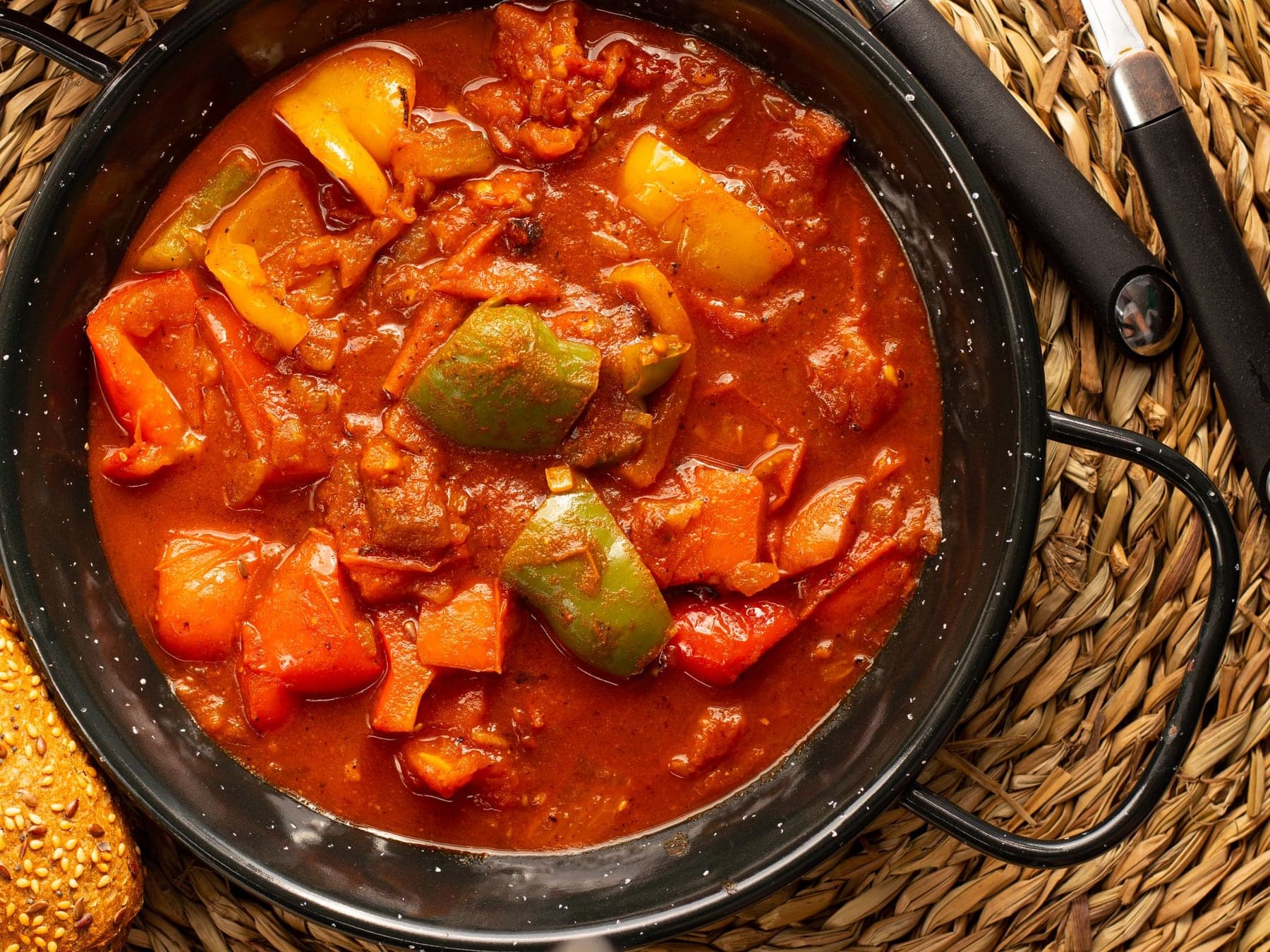
Lecho is one of the few vegetable dishes that crossed half of Europe under one name. It began as Hungarian lecsó, sweet peppers and tomatoes stewed with onion and paprika, often with lard or sausage, eaten in late summer when both vegetables are at their cheapest. Through the twentieth century the dish spread across Central and Eastern Europe, and in Ukraine it became something slightly different: a staple of home canning, prepared by the jar in August and September and opened through the winter.
That transformation is the key to understanding what is inside a jar labelled "lecho" today. The Hungarian original is a fresh stew; the Ukrainian version is a preserve, and the preserve has its own logic.
How Ukrainian lecho differs from lecsó
Three things change when a stew becomes a preserve:
- Acidity. A small amount of vinegar makes the product safe to sterilise at around 100 °C and gives the characteristic sweet-sour edge. Hungarian lecsó has no vinegar at all.
- Sugar and oil. Ukrainian recipes almost always include sugar and sunflower oil. The sugar balances the acid; the oil carries the pepper flavour and gives the sauce body.
- Pepper-forward composition. In a Ukrainian jar, sweet peppers are the main ingredient by weight and the tomato is the sauce, not the other way round. Onion, so important in Hungary, is optional and often absent. Garlic and black pepper are common.
The result is less a stew than a conserve of peppers in tomato sauce, something you can eat straight from the jar, cold, as a salad or side.
What is in the MADESA jar
Our lecho follows the Ukrainian pattern. Sweet peppers make up 50 % of the product. The sauce is based on tomatoes (37 %) or, depending on the season, tomato paste (25 %) with water, together with white sugar, sunflower oil, salt, acetic acid as acidity regulator, modified maize starch for body, garlic and spices. It is sterilised in a 480 g glass jar, made without added preservatives, and keeps for 24 months at 0–25 °C.
The ingredient list is worth reading closely because it tells you what kind of lecho it is: pepper-dominant, moderately sweet, with a lightly thickened sauce, the style most Ukrainian households would recognise from their own cellars.
Two related products sit next to it in the range:
- Lecho sauce is a different thing entirely: a smooth tomato sauce (tomato paste 24.3 %) flavoured with dried sweet pepper, onion, carrot and garlic, sold in a 485 g bottle-shaped jar. It is for pouring over or cooking with, not for eating as a vegetable.
- Vegetable sauté is lecho's cousin: courgettes, sweet peppers, aubergines and carrot in tomato sauce, closer to a ratatouille.
How it is eaten in Ukraine
Lecho in a Ukrainian home does several jobs:
- as a cold side dish with potatoes, buckwheat or rice;
- warmed, with sausages, fried eggs or roast meat;
- stirred into soups and stews in winter as a ready source of pepper and tomato;
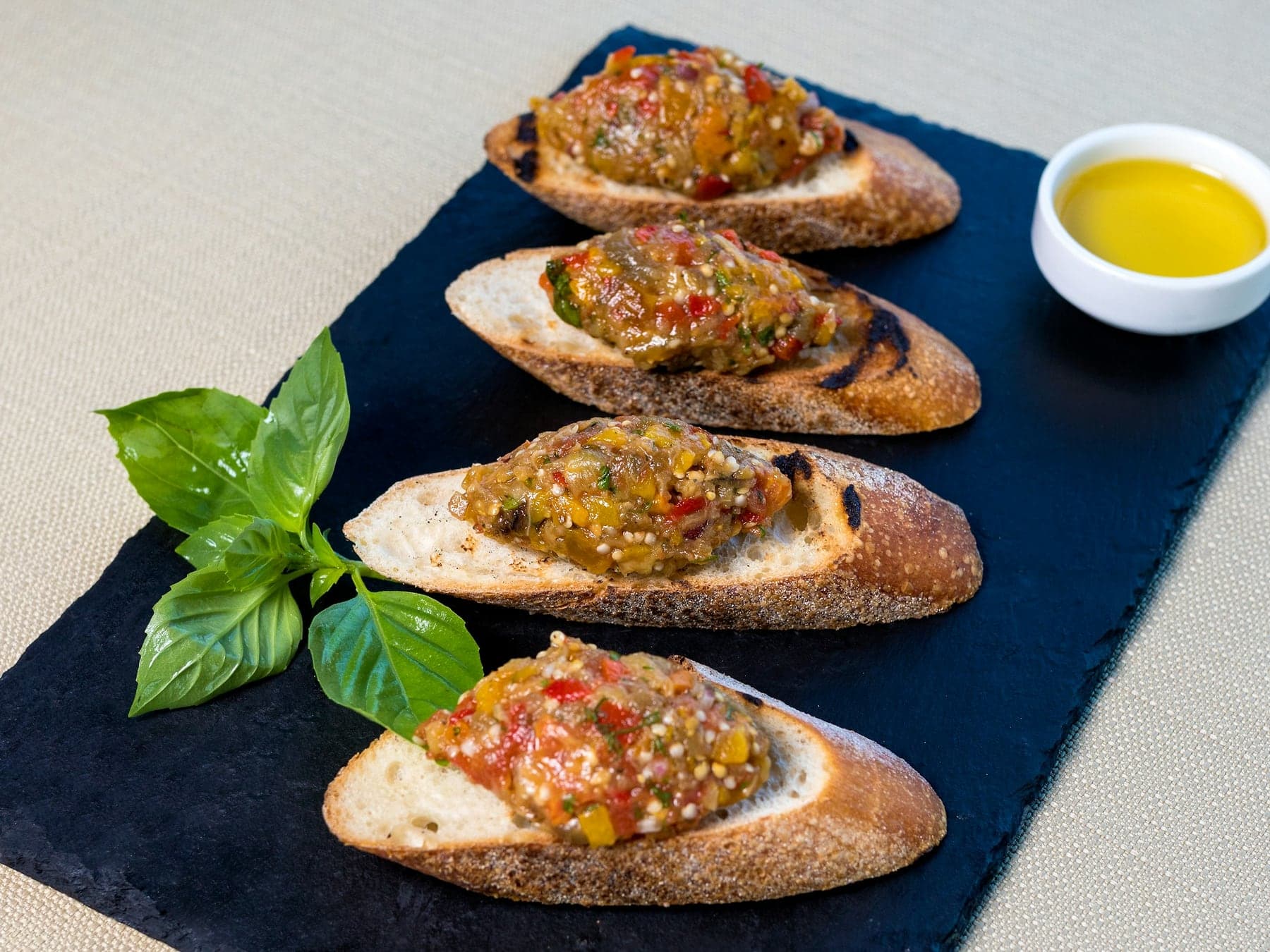
- on bread, as a simple snack.
The jar replaces, in a single step, the buying, roasting and stewing of peppers, which is why it was canned at home in the first place.
Where it fits in a European kitchen or on a shelf
For a retailer, lecho belongs with the Eastern European preserves next to pickled gherkins, vegetable ikra and adjika, the products that customers from Ukraine, Poland, Hungary and the Baltic states look for by name. It also travels well beyond that aisle. In a professional kitchen, a sterilised lecho is:
- a ready base for shakshuka-style eggs: warm, make wells, crack in the eggs;
- a pepper-and-tomato sauce for pasta or grilled chicken with no preparation;
- a topping for flatbreads and pizza where roasted-pepper flavour is wanted;
- a cold component for buffet and salad bars, straight from the jar.
Because the product is already cooked and acidified, it needs no further processing for safety; it only needs to be refrigerated once opened and used within a few days.
Lecho and its look-alikes
Several European kitchens have a dish of peppers stewed with tomato, and buyers sometimes treat them as one product. They are not:
- Peperonata (Italy) is peppers softened in olive oil with onion and tomato, served warm or at room temperature; it is a fresh dish, not acidified, and is rarely preserved in jars.
- Ajvar (Balkans) is made from roasted, peeled, minced red peppers cooked down with oil, a dense relish, not a vegetable dish with whole pieces.
- Lecsó (Hungary) is the fresh stew with onion and paprika, often with sausage, described above.
- Lecho (Ukraine) is the sterilised, lightly sweet-sour preserve of pepper strips in tomato sauce.
On a shelf plan these are four facings, not one. On a menu, lecho is the only one of the four that arrives cooked, acidified and ready to serve cold.
Reading the label
If you are comparing lechos from different producers, three label points separate them:
- The pepper percentage. The higher it is, the more vegetable and the less sauce you are paying for. Ours is 50 %.
- Tomatoes or tomato paste. Both are legitimate; paste gives a deeper colour and more body, fresh tomatoes a lighter sauce. A label may list either, as ours does, depending on the season of production.
- Thickener and preservatives. Modified starch is a common and harmless way to keep the sauce from separating; preservatives are unnecessary in a properly sterilised product, and their presence suggests a milder process.
Our lecho is produced to a technical specification, TU U 10.3-44851902-001:2023. What TU and DSTU mean on a Ukrainian label, and how they differ, is explained in a separate guide.
A dish that keeps its character
What makes lecho worth carrying is that it is honest: a jar of peppers and tomatoes, cooked once, with a flavour that is recognisably the same whether it is opened in Cherkasy or in a European city. For stock enquiries about lecho and the rest of our ready vegetable dishes, request a quote; for ideas, our recipe pages show how we cook with it.
Frequently asked questions
What is the difference between lecho and lecsó?
Lecsó is the Hungarian fresh stew of peppers, tomatoes, onion and paprika, often with sausage, and contains no vinegar. Ukrainian lecho is a sterilised preserve with vinegar, sugar and sunflower oil, in which sweet peppers dominate and tomato forms the sauce.
Can you eat lecho cold?
Yes. Ukrainian lecho is already cooked and acidified, so it can be served straight from the jar as a cold side dish or salad. It is also warmed and served with eggs, sausages or roast meat.
Is lecho the same as ajvar?
No. Ajvar is a dense relish of roasted, peeled and minced red peppers cooked down with oil. Lecho keeps strips of pepper in a tomato sauce and is eaten as a vegetable dish.
What is the difference between lecho and lecho sauce?
MADESA lecho is a vegetable dish with 50 % sweet peppers. Lecho sauce is a smooth tomato sauce based on tomato paste with dried sweet pepper, onion, carrot and garlic, used for pouring over or cooking with rather than eaten as a vegetable.
How long does lecho keep?
Unopened, MADESA lecho keeps for 24 months at 0 °C to +25 °C. Once opened, keep it in the fridge and use it within a few days.