

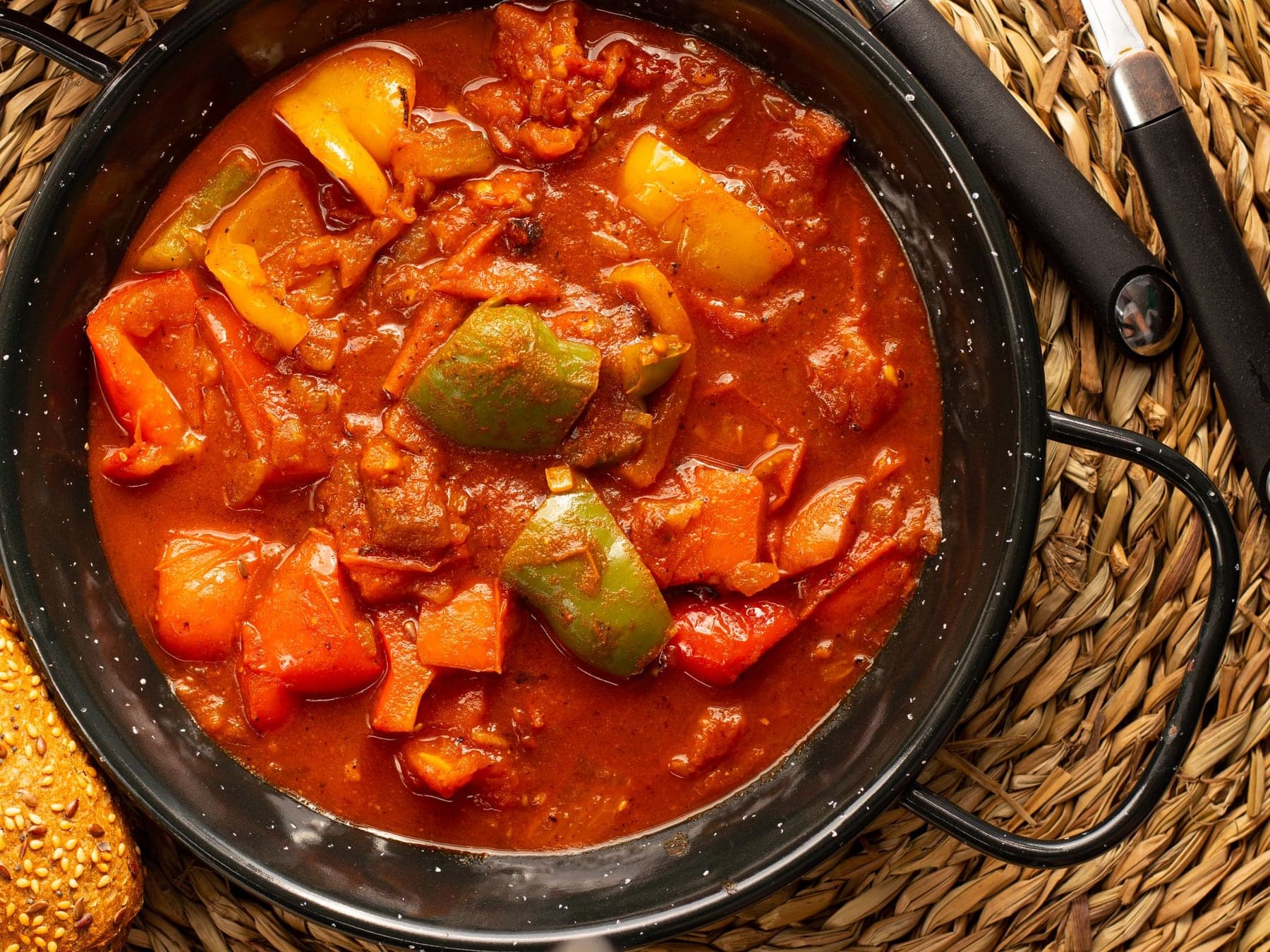
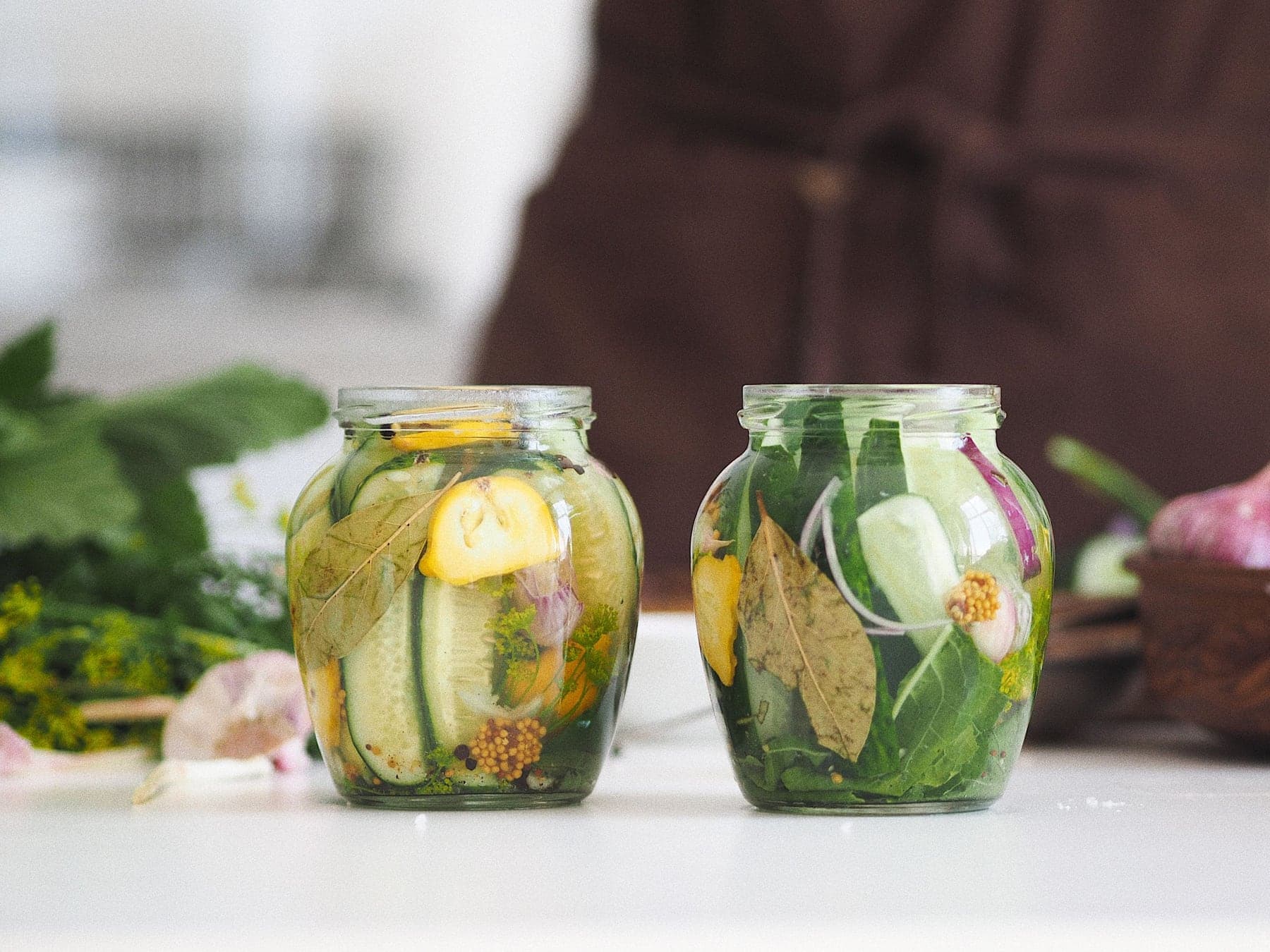
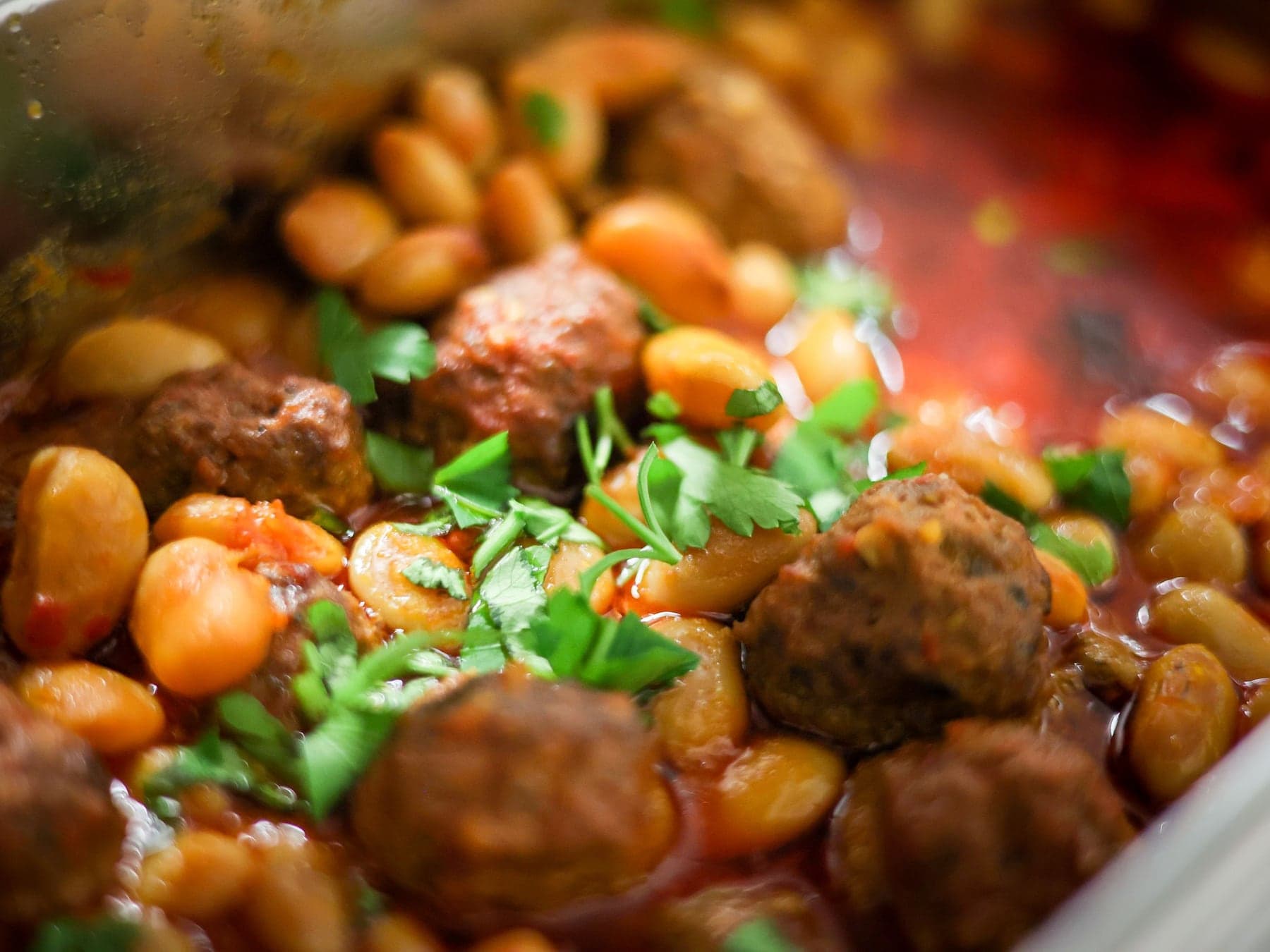
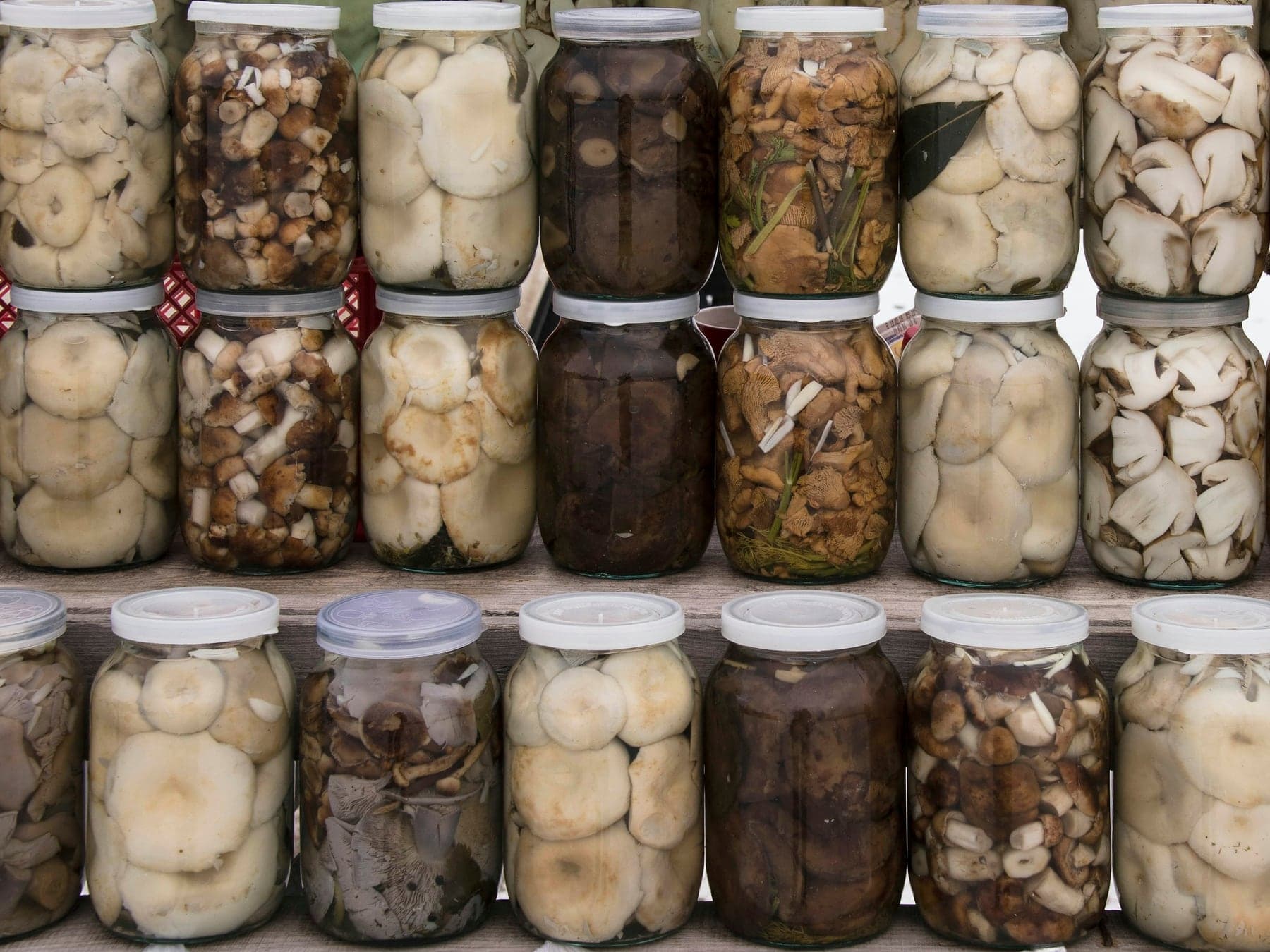
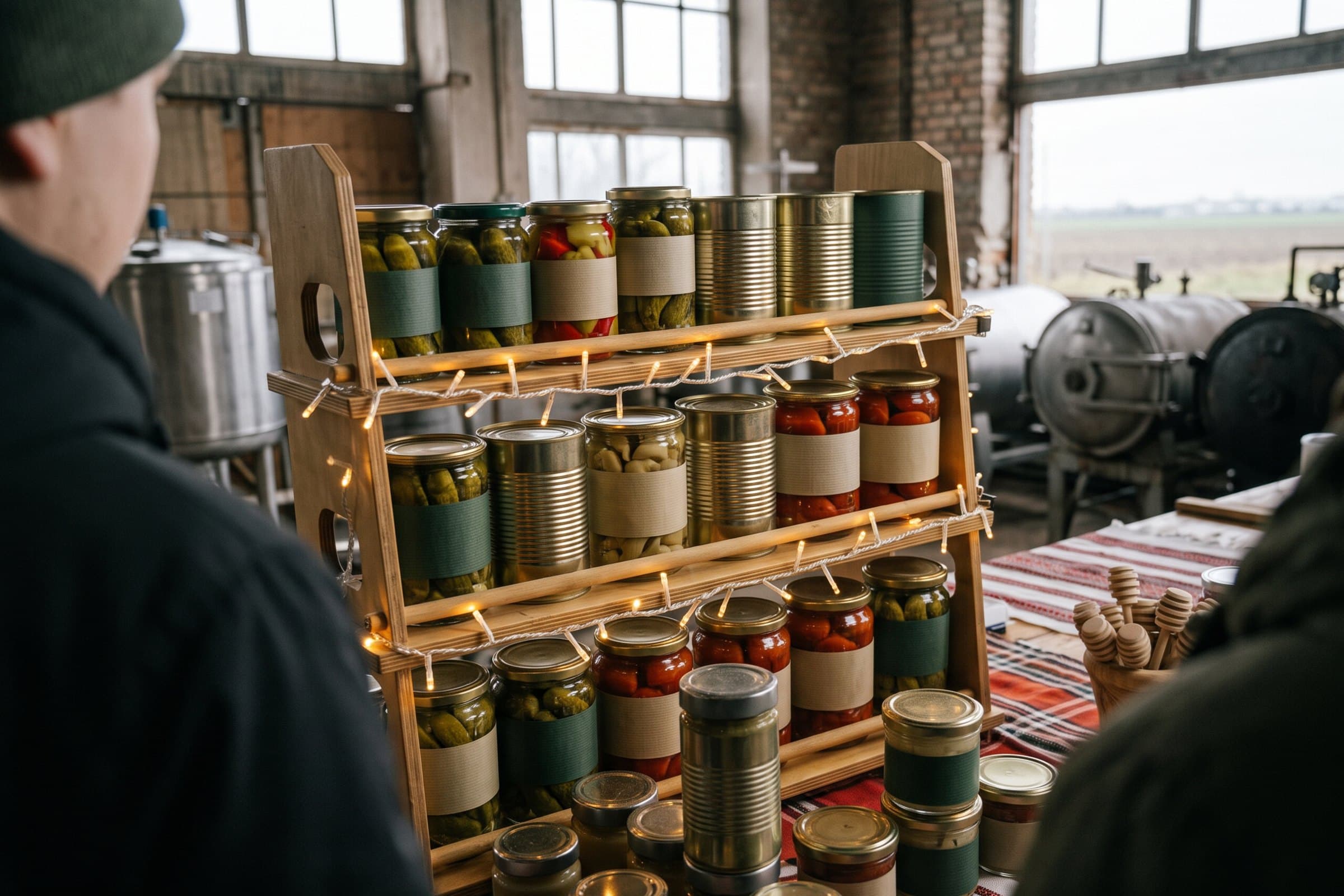
Every Ukrainian jar carries a short line of letters and digits that most buyers skip: ДСТУ 5081:2008 on a tomato paste, ТУ У 10.3-44851902-001:2023 on a courgette ikra. The line is not decoration. It tells you which document defines the product, its name, its permitted ingredients, its grade criteria and the laboratory parameters it is checked against. This guide explains how to read it, what it does and does not guarantee, and how to turn it into a usable product specification for an EU or UK buyer.
Two kinds of standard, one line on the label
Ukrainian food law treats product standards as voluntary. The Law of Ukraine "On Standardisation" (2014) made national standards non-binding, so a manufacturer chooses the document it produces against and then declares it on the label. There are two main options.
ДСТУ (DSTU): державний стандарт України, the national standard. DSTU documents are published by the national standardisation body (UkrNDNC) and are public: anyone can buy the text. A DSTU for a product group defines the product name, the raw materials allowed, the physical and chemical parameters (dry matter, acidity, salt, drained weight), the sensory requirements and the grade categories. Our sterilised tomato paste, 500 g is produced to DSTU 5081:2008, the national standard for tomato concentrates; our pickled gherkins, 3 kg to DSTU 7989:2015; our plum jam to DSTU 4900:2007.
ТУ У (TU U): технічні умови України, a technical specification written and registered by a specific company for a specific product or product family. A TU U is used where no DSTU exists or where the recipe departs from the national standard, a sauce with apple purée, a vegetable mix "in variable proportions", an aubergine dish in adjika. The TU U is the manufacturer's own document, but it is registered with the state system and must comply with all general food-safety and labelling law.
Neither is "better". A DSTU product follows a public, generic definition; a TU U product follows a private, registered one. For a buyer the practical difference is simple: with a DSTU you can read the standard yourself; with a TU U you must ask the manufacturer for the parameters.
How to read a DSTU number
ДСТУ 5081:2008 breaks down into three parts: the prefix, the serial number of the standard and the year of approval after the colon. Older standards use a hyphen and a two-digit year, ДСТУ 3749-98 on our "Zakusochnyi" vegetable salad was approved in 1998. The year matters less than buyers assume: a standard remains valid until it is withdrawn or replaced, and a 1998 text can still be the current one.
You will also meet DSTU numbers with a second code in brackets, for example ДСТУ ISO 22000:2019 (ISO 22000:2018, IDT). The letters IDT mean the Ukrainian standard is an identical adoption of the international one, the same text, translated. This is how our ISO 22000 and ISO 9001 certificates are worded: the Ukrainian DSTU editions are identical to the ISO originals, so the certificate means the same thing in Kyiv as it does in Rotterdam.
Occasionally an older label cites a Soviet-era ГОСТ alongside a DSTU. Ukraine has withdrawn most of those legacy standards; where a GOST still appears in brackets, it usually indicates the text the DSTU was originally harmonised with, not a separate requirement.
How to read a TU U number
A TU U code looks longer but is just as regular. Take ТУ У 10.8-30905643-007:2021:
- ТУ У: technical specification of Ukraine.
- 10.8: the economic activity class of the product under the Ukrainian classifier (КВЕД), which mirrors the EU NACE codes. 10.8 is "other food products" (sauces and condiments fall here); 10.3 is "processing and preserving of fruit and vegetables".
- 30905643: the eight-digit state registration code (ЄДРПОУ) of the organisation that holds the specification. On our tomato sauces this block is PE MADESA's own registration number, which you can cross-check on our company details page.
- 007: the serial number of the specification within that organisation.
- :2021, the year of approval. A suffix such as
-001:2023indicates an amendment adopted later.
So the line on our Satsebeli sauce tells you: a sauce-class product, specified by MADESA itself, specification number seven, approved in 2021 and amended in 2023.
What a grade means: and what it does not
Many DSTU product standards divide a product into grades: вищий ґатунок (premium grade) and перший ґатунок (first grade), sometimes a second grade. The grade is a quality-sorting category, not a safety category. It reflects criteria such as size uniformity, colour, the share of pieces with cosmetic defects, the firmness of a cucumber or the consistency of a paste. A first-grade gherkin is as safe as a premium-grade one; it may simply be less uniform in length.
On our labels you will see premium grade on the 500 g tomato paste and first grade on the 3 kg pickles, the mushrooms, the tomato juice and the plum jam. TU U products normally carry no grade at all, because the specification describes a single product rather than a sorted range.
For a European buyer the grade is useful in one specific way: it tells you which column of the DSTU table to read when you compare the Ukrainian parameters with your own specification.
Why an EU buyer should still care
DSTU and TU U are Ukrainian documents. They are not required for import into the EU, and they do not replace the information that Regulation (EU) No 1169/2011 requires on the consumer label, legal name, ingredient list with allergens emphasised, quantity of characterising ingredients, net quantity, date of minimum durability, storage conditions and the responsible food business operator. Those rules are a separate layer, and the importer applies them.
But the standard line answers questions the EU label does not. It tells you what the product is in the manufacturer's own regulatory language, what the legal name on the Ukrainian market was, and which parameters are tested at release. When we prepare a product specification for a buyer, the DSTU or TU U is the starting document: we take its parameters, dry matter, acidity, salt, drained weight, sensory description, and map them onto the buyer's template. The product page of every item in our catalogue shows the standard line for exactly this reason.
A short checklist for your specification
Before you sign a product specification with any Ukrainian manufacturer, ask for the following:
- The standard reference: DSTU number or full TU U code, and confirmation that it is the current edition.
- The legal name under that standard, it may differ from the marketing name on the front of the jar. "Beans with vegetables in tomato sauce" is a legal name; "Mexican Fiesta" is not.
- The release parameters: which physical, chemical and microbiological tests are run on each batch, with the limits taken from the standard.
- The grade, if applicable: and the sorting criteria behind it.
- The quantitative ingredient declaration: the percentage of the characterising ingredient (for example, 50 % whole gherkins in the 3 kg jar, 70.9 % plums in the jam).
- Whether the product contains preservatives, this is declared product by product, never for a whole range. In our catalogue 24 of 27 products are made without added preservatives; three are not, and their pages say so.
- The mapping to EU labelling, who drafts the EU-compliant label, and in which languages.
If an answer is not in the standard, it should be in the manufacturer's specification. If it is in neither, treat it as unknown until it is written down.
How we handle this at MADESA
All 27 products on this site list their standard on the product page: eight are produced to a DSTU, the rest to registered TU U specifications. Both production sites, in Chyhyryn and Chornobai, operate under a food safety management system certified to ISO 22000 and a quality management system certified to ISO 9001, and every batch is released against the parameters of its standard.
If you need the full parameter table for a product, or a specification drafted on your own template, request it here and name the product and the standard line. The translation from DSTU to your document is work we do routinely, and it is far quicker when both sides start from the same line on the label.