

In short
- Ask for the manufacturer's legal name, registration code and production site address, not only a brand name.
- Check the certificate itself, its standard, number, validity and the accreditation of the certification body; MADESA's ISO 22000 and ISO 9001 certificates are valid until 23 September 2027.
- A road shipment from Ukraine typically travels with a commercial invoice, packing list, CMR note and certificate of origin; preferential origin is proven with EUR.1 or an origin declaration.
- Raw material origin should be stated plainly: MADESA tomato paste is made from Turkish tomato raw material, and the pitted olives are made in Türkiye and packed in Chyhyryn.
- Minimum order, lead time, Incoterms and payment terms are agreed per contract, so a complete first enquiry is the fastest route to a quotation.
On this page
- 1. Who exactly is the manufacturer, and where is the product made?
- 2. Which food safety certification does the plant hold, and is it current?
- 3. Is HACCP in place?
- 4. What documents accompany a shipment?
- 5. Are there veterinary or phytosanitary formalities?
- 6. What is in the jar: and is the ingredient list complete?
- 7. Where does the raw material come from?
- 8. What shelf life will I receive?
- 9. Which pack formats, and how are they palletised?
- 10. What are the minimum order quantity and the lead time?
- 11. Which Incoterms and payment terms do you work with?
- 12. Can you produce under my label?
- What to send us for a fast quotation
Importing food from Ukraine into the EU is a well-trodden road: the Association Agreement has been in force for years, road haulage between Ukraine and the EU runs daily, and the EU and Ukrainian food-information rules share the same structure. What makes a first contract slow is not the regulation, it is the questions that nobody wrote down at the start. Here are the twelve we are asked most often by importers, distributors and retail buyers, with our answers. Where we have the data, we give it. Where it depends on your order, we say so instead of inventing a number.
1. Who exactly is the manufacturer, and where is the product made?
Ask for the legal name, the registration code and the address of the production site, not just a brand name. Brands can be owned by one company and produced by another. Our products are made by Private Enterprise "MADESA" (registration code 30905643) at our production sites in Chyhyryn and Chornobai, Cherkasy Oblast, under two brands, M.A.D.E.S.A and MIRASA. Full legal details are on the company details page.
2. Which food safety certification does the plant hold, and is it current?
Ask for the certificate itself, not a logo. Check four things: the standard, the certificate number, the validity dates and the certification body's accreditation. Our food safety management system is certified to ISO 22000 (certificate FSMS.8O140.35-2024) and our quality management system to ISO 9001 (certificate QMS.8O140.36-2024). Both are valid from 24 September 2024 to 23 September 2027 and were issued by Ukrsertyfikatsiia, a body accredited by the National Accreditation Agency of Ukraine (NAAU, accreditation 8O140), which is a signatory of the IAF multilateral arrangement, so the certificates are recognised by accreditation bodies across the EU. Both are published on our quality page. We do not hold BRCGS, IFS or organic certification; if your listing policy requires one of these, tell us at the first conversation.
3. Is HACCP in place?
ISO 22000 incorporates the Codex HACCP principles, so a current ISO 22000 certificate answers the question. In Ukraine, HACCP-based procedures are also a legal requirement for food operators under the national food safety law, enforced by the State Service for Food Safety and Consumer Protection. What a buyer usually wants in addition is the HACCP plan summary for the product in question, critical control points, limits and monitoring. That is provided under a confidentiality agreement on request.
4. What documents accompany a shipment?
The commercial set is standard: commercial invoice, packing list, CMR consignment note for road transport, and a certificate of origin. For preferential tariff treatment under the EU–Ukraine Association Agreement, origin is proven with a EUR.1 movement certificate or an origin declaration on the invoice; your customs broker will tell you which applies to your consignment value. On the quality side we provide a product specification, the ISO certificates, and a batch quality document (declaration or certificate of quality) stating the production date, shelf life and the parameters tested at release. Laboratory test reports for specific parameters are available on request and are agreed per contract.
5. Are there veterinary or phytosanitary formalities?
All 27 products in our catalogue are of non-animal origin, vegetables, fruit, sugar, salt, oil, spices, so they do not fall under the veterinary certification required for meat and dairy. Processed, sterilised vegetable products are also outside the scope of the phytosanitary certificates that apply to fresh plants. Border requirements can change, and certain products from certain origins are periodically placed under increased official controls; your broker should confirm the position for each product before the first shipment. We will supply whatever product-specific documentation the control authority asks for.
6. What is in the jar: and is the ingredient list complete?
Ask for the full ingredient list with percentages of characterising ingredients, the allergen statement and the list of additives with E-numbers. Every product page on this site shows the ingredient list in English and Ukrainian, the declared allergens, and whether the product contains preservatives. In our range 24 of 27 products are made without added preservatives; the pasteurised 5 kg tomato paste and the two olive products are the exceptions, and their pages say so. Where a label says "spices or spice extracts", ask for written confirmation of whether celery or mustard are present, the two allergens that hide in spice blends. We confirm this product by product on request.
7. Where does the raw material come from?
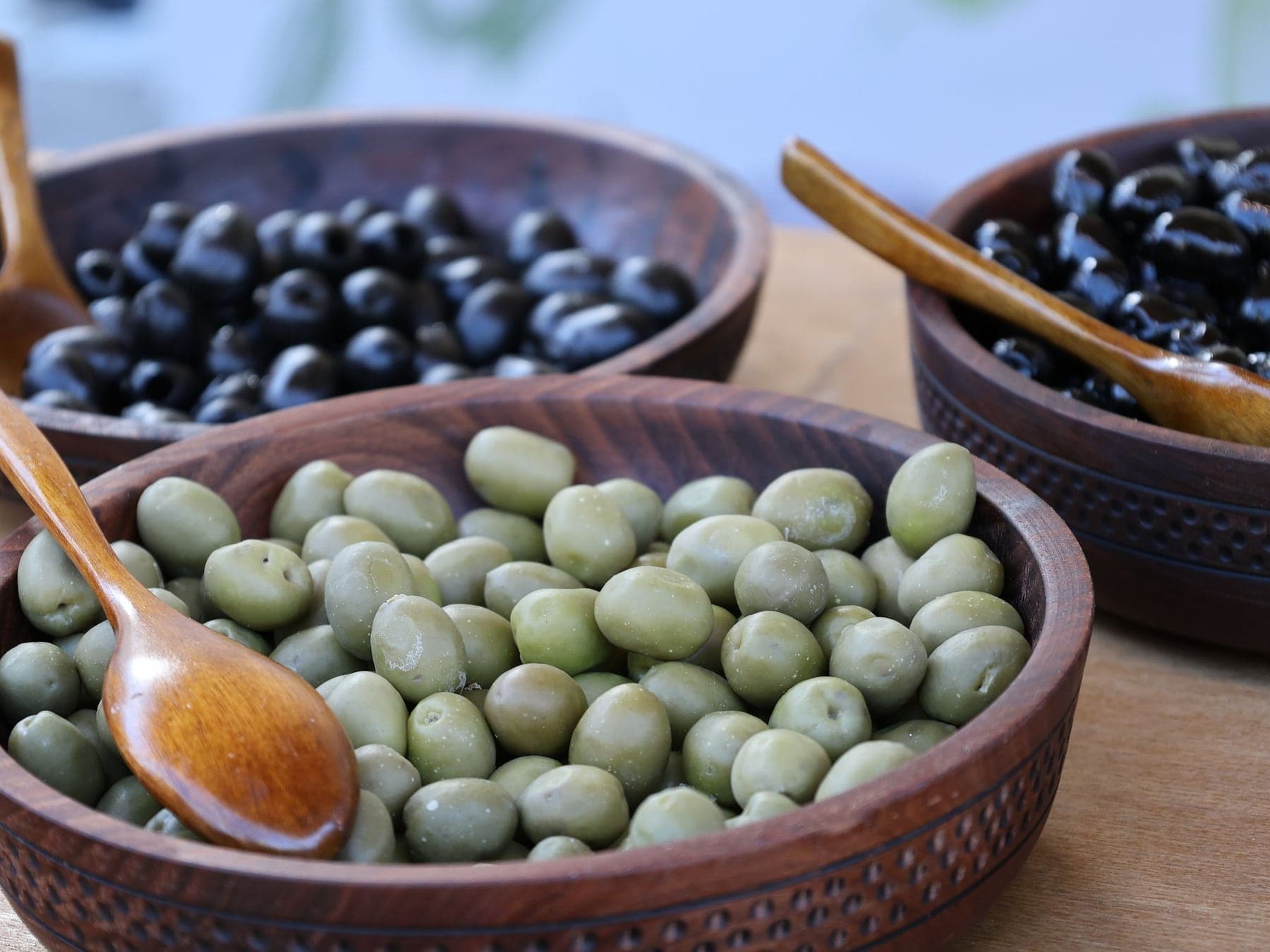
This question matters more than it used to, because Regulation (EU) 2018/775 requires the origin of the primary ingredient to be indicated when it differs from the declared origin of the food. We answer it plainly: our sterilised tomato paste and pasteurised 5 kg tomato paste are made in Chyhyryn from Turkish tomato raw material, as the label states. Our pitted black and green olives are made in Türkiye and packed in Chyhyryn. The vegetables in our pickles, ready dishes, ikra and beans are processed in Ukraine; origin details for a specific ingredient and season are available on request.
8. What shelf life will I receive?
Two figures matter: the total shelf life from the production date and the remaining shelf life on arrival. Our products carry a shelf life of two or three years, depending on the product, the figure is on each product page. Storage conditions are 0 °C to +25 °C at a relative humidity of no more than 75 %, which an ambient warehouse meets. The minimum remaining shelf life at delivery is agreed in the contract; tell us your requirement before we plan production.
9. Which pack formats, and how are they palletised?
We pack in glass jars from 480 g to 3 kg, with a 5 kg plastic pail for the pasteurised tomato paste. Jars are packed in cartons on standard pallets; carton counts, pallet configuration and gross weights for a specific product are provided on request, because they differ by jar size. If your warehouse works with a particular pallet type or height limit, say so in the enquiry.
10. What are the minimum order quantity and the lead time?
Both depend on the product, the season and whether we are producing to stock or to order, so we do not publish a single figure. Minimum quantities and lead times are quoted per enquiry and fixed in the contract. Seasonal vegetables, cucumbers, tomatoes, peppers, courgettes, are processed during the harvest, and large orders of those products are best planned ahead of the season.
11. Which Incoterms and payment terms do you work with?
Delivery terms and payment conditions are agreed per contract. We have no fixed rule that excludes any standard Incoterm; the practical choice depends on who organises the road transport and the export clearance. State your preferred terms in the enquiry and we will confirm what we can offer for that destination.
12. Can you produce under my label?
Yes, within the recipes and formats we already run; the scope, minimum quantities and timeline are agreed per project. The process, the artwork requirements and what we need from you to start are described on the private label page. Labels for an EU market must meet Regulation (EU) No 1169/2011; we provide the ingredient and nutrition data, and the final artwork is approved by both sides before printing.
What to send us for a fast quotation
A complete first enquiry saves a week of back-and-forth. Include: the products and formats you are interested in (use the slugs or names from the catalogue), the destination country, the approximate annual volume if you know it, your preferred delivery terms, the minimum remaining shelf life you require, and whether you need our brand or your own label. Send it through the quote form or by phone or WhatsApp on +380 50 749 51 75, and you will receive a written answer to all twelve questions above, specific to your order.
Frequently asked questions
Do Ukrainian vegetable preserves need a veterinary certificate for EU import?
No. Products of non-animal origin, such as vegetables, fruit, sugar, salt, oil and spices, fall outside the veterinary certification required for meat and dairy, and processed, sterilised vegetables are also outside the phytosanitary certificates for fresh plants. Border rules can change, so your customs broker should confirm the position for each product before the first shipment.
Is HACCP mandatory for food producers in Ukraine?
Yes. Ukrainian food safety law requires food business operators to apply procedures based on HACCP principles, and the State Service for Food Safety and Consumer Protection enforces it. ISO 22000 incorporates the same principles, so a current ISO 22000 certificate also answers the question. Buyers often ask in addition for a summary of the HACCP plan for the specific product.
What remaining shelf life should an importer ask for on delivery?
There is no single figure: it is agreed in the contract and depends on your sales channel and stock rotation. Start from the total shelf life, two or three years for MADESA products depending on the product, and state your minimum remaining shelf life before production is planned.
Can a Ukrainian manufacturer produce preserves under my own label?
MADESA produces under customer labels within the recipes and formats it already runs, with scope, minimum quantities and timeline agreed per project. For an EU market the label must meet Regulation (EU) No 1169/2011; the manufacturer supplies ingredient and nutrition data, and both sides approve the final artwork before printing.
Will I receive carton and pallet data before ordering?
Yes, on request. Carton counts, pallet configuration and gross weights differ by jar size, so they are given for the specific product. If your warehouse works with a particular pallet type or height limit, mention it in the enquiry.