

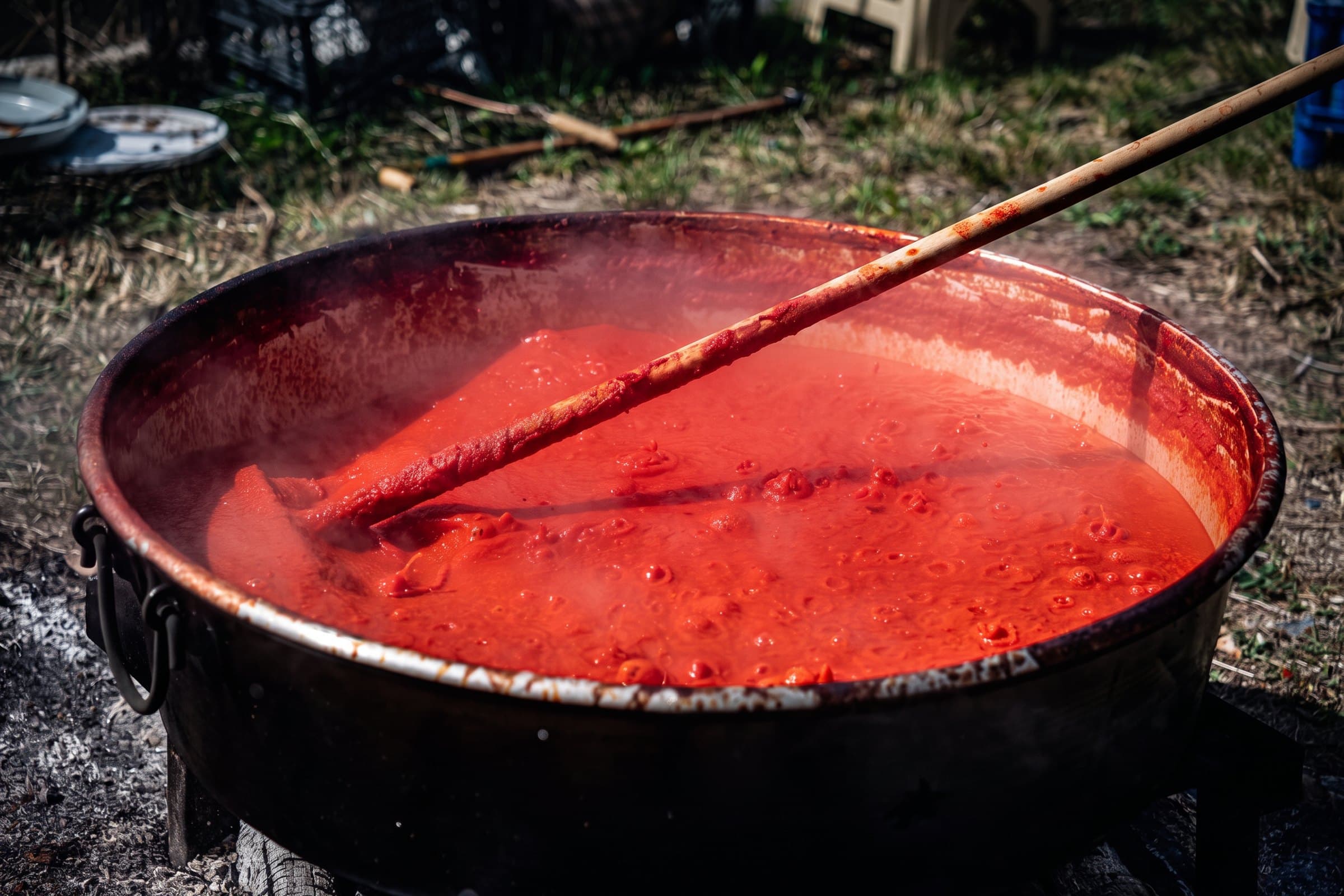
Why dry matter is the first number to read
Tomato paste is bought by weight but used by concentration. A kitchen that pays for 5 kg of paste at 25 % dry matter is buying roughly 1.25 kg of tomato solids and 3.75 kg of water; the same money spent on a paste at 18–20 % buys noticeably less tomato. Dry matter, the share of the product that is not water, measured as soluble solids in degrees Brix or as total solids by drying, is therefore the number that lets you compare offers at all.
Concentration also defines what the product is. Both MADESA pastes are made to DSTU 5081:2008, the Ukrainian standard for concentrated tomato products. Under the Codex Alimentarius standard for processed tomato concentrates, "tomato paste" begins at 24 % natural soluble solids; anything below that is purée. In Italian trade usage "double concentrate" means 28 % and above, "triple concentrate" 36 % and above. Our two pastes are both 25 %.
Two practical consequences follow:
- Dilution ratio. To bring a 25 % paste back to the concentration of tomato juice or passata (roughly 6–8 % solids), you dilute it with about three parts water by weight. One 5 kg pail therefore yields in the region of 20 kg of tomato base. That arithmetic belongs in your recipe costing, not on the label.
- Dosing. Paste is dosed in grams, not spoonfuls. A cooking card that specifies grams of paste at a stated dry-matter percentage can be moved between suppliers without changing the dish; one that says "two spoons" cannot.
Sterilised or pasteurised: two pastes, two jobs
MADESA makes tomato paste in two formats, and they are not interchangeable.
The 500 g glass jar is sterilised, premium grade, and has an ingredient list of one word: tomatoes. It keeps for 36 months unopened at 0–25 °C. It suits restaurants with moderate paste consumption, hotel kitchens that want a sealed unit per service, and retail shelves.
The 5 kg plastic pail with handle is pasteurised rather than sterilised and contains ascorbic acid, which protects colour during the longer open-pail period. It keeps for 24 months unopened. This is the pack for production kitchens, catering operations, sauce manufacturers and anyone dosing paste by the kilogram.
The difference matters after opening as much as before. Both products lose their protection once the seal is broken. A 500 g jar is usually finished within a service or two; a 5 kg pail may be open for days and must be kept covered and refrigerated, with a clean utensil every time. If your consumption is low, two jars are better than one pail: the unit cost may be higher, but waste and food-safety exposure are lower.
What a good specification tells you
When you ask a supplier for a tomato paste specification, the sheet should answer the following without further correspondence:
- Dry matter / soluble solids, the headline figure, with the method (refractometer Brix or oven total solids).
- Grade and standard: for a Ukrainian product, the DSTU number and the grade (premium or first); for other origins, the national or company standard.
- Ingredients: tomatoes only, or tomatoes plus salt, acid, antioxidant. Each addition is legitimate, but it changes how the paste behaves in a recipe.
- Colour and consistency: colour is usually given as an instrumental a/b ratio, consistency on a Bostwick consistometer. If the supplier does not measure these, ask how batches are kept consistent.
- pH: relevant for your own HACCP plan if you make shelf-stable products from the paste.
- Shelf life, storage conditions and the date format on the pack.
- Raw material origin. Our paste is made at the Chyhyryn site from Turkish tomato raw material, and we say so on the label. If a supplier is vague about origin, that is itself information.
A supplier that produces under a certified food safety management system, MADESA holds ISO 22000 and ISO 9001, should also be able to show how the specification is verified batch by batch.
Pack size against the way you cook
The right pack is not the cheapest per kilogram; it is the one that matches your consumption pattern. A simple way to decide:
- Estimate your weekly paste use in grams from your recipe cards.
- Divide by the number of days a pack can safely stay open after the seal is broken.
- If a 5 kg pail would still be in use after that window, drop down to jars, or split your order between pails for high-volume sauces and jars for occasional use.
Also consider storage. Glass jars stack on standard shelving and survive a hot kitchen; pails need floor or deep-shelf space and a cool store between uses. Both formats must be kept at 0–25 °C and away from direct heat before opening.
Where paste earns its place
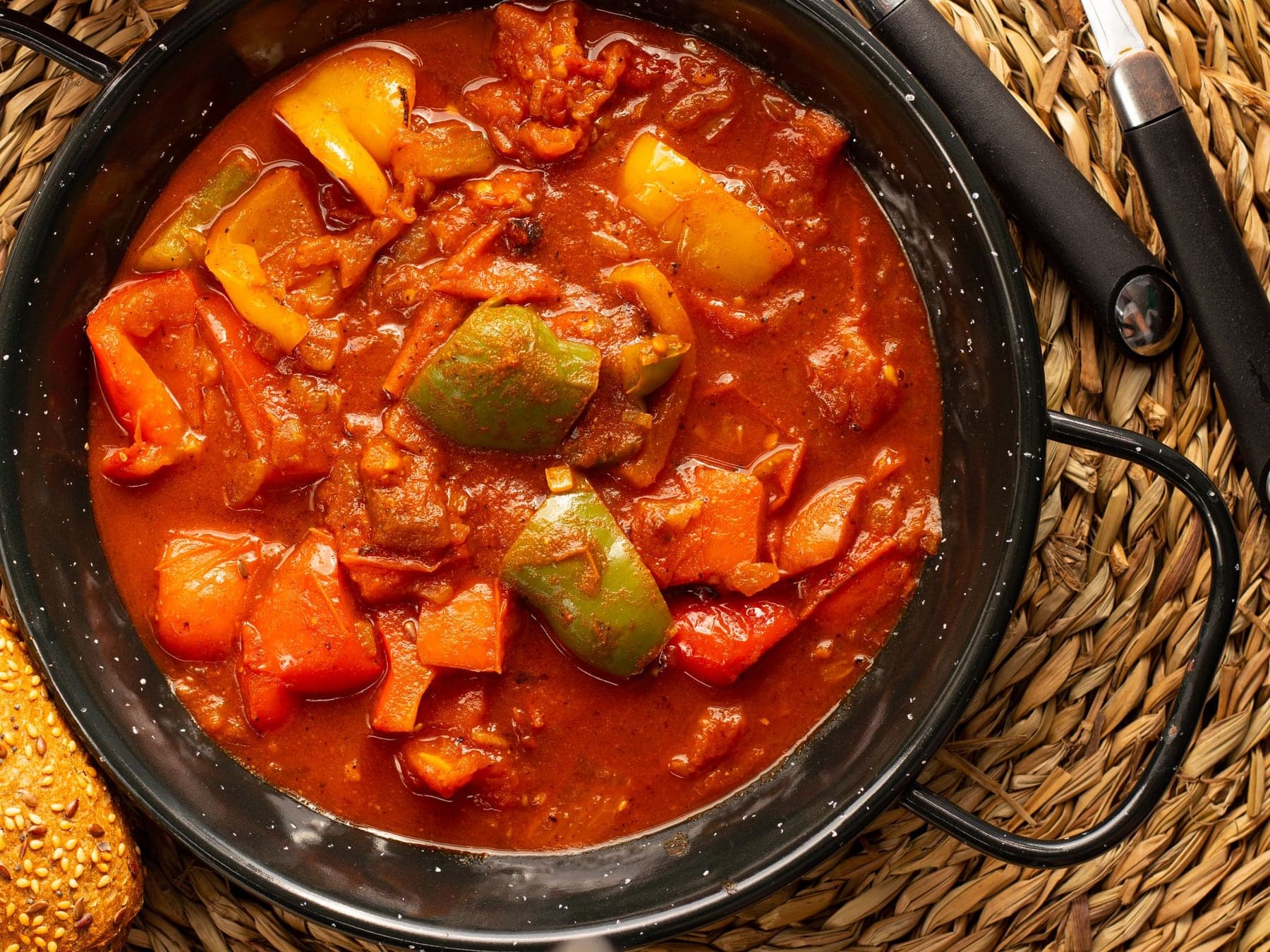
Tomato paste is not a substitute for chopped tomatoes or passata; it is a concentrate for depth, colour and body. In professional kitchens it works hardest in:
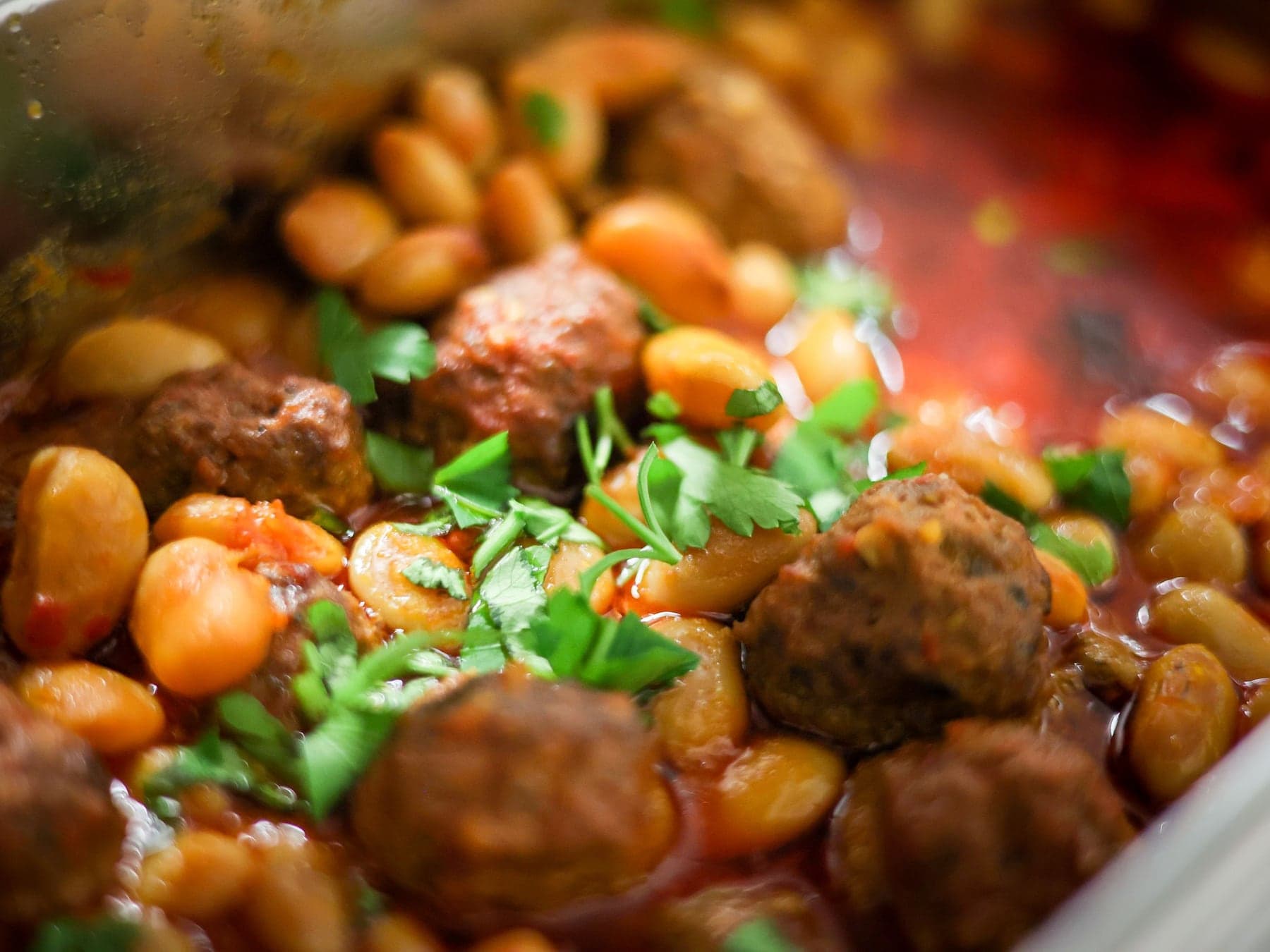
- long-cooked sauces and braises, where its concentration survives reduction;
- soups and borshch, where it replaces fresh tomatoes out of season without watering the pot down;
- marinades and glazes, where body matters;
- ready-meal and sauce production, where consistent dry matter keeps the finished product within specification.
For dishes that call for fresh tomato character, a quick pan sauce, a salad dressing, a lower-concentration product or tomato juice is the better choice.
A short comparison checklist
Before you sign a supply agreement for tomato paste, compare offers on these points, line by line:
- Dry matter percentage and the measurement method.
- Price per kilogram of tomato solids, not per kilogram of product.
- Sterilised or pasteurised; additives declared.
- Unopened shelf life and realistic open-pack life for your kitchen.
- Pack format and how it fits your storage.
- Standard, grade and origin on the label.
- Certification of the production site and availability of batch documentation.
If you would like the specification sheets for either MADESA paste, or want to discuss volumes for food service supply, request a quote and our team will send the documents.