In short
- MADESA began in 2000, on the initiative of a woman who wanted to build her own business in food.
- The previous production site was destroyed during Russia's full-scale invasion; a new, modern plant was built during the war in Kodaky, Kyiv Oblast, and production started there in 2026.
- The legal entity is unchanged (Private Enterprise “MADESA”, EDRPOU 30905643), and the company has one address: 85B Soborna Street, Kodaky, Kyiv Oblast, Ukraine.
- Food safety, quality and environmental management are certified to ISO 22000, ISO 9001 and ISO 14001 by Ukrsertyfikatsiia, with all three certificates valid until 23.09.2027.
- The range covers 35 products in five categories under the M.A.D.E.S.A and MIRASA brands, most of them made without added preservatives.
On this page
Buyers who meet MADESA for the first time usually ask two questions before they ask about products: who is behind the company, and where is the food made. Both answers have changed in recent years. This article sets them out with the facts we can document: no founding legends, and no figures we cannot show you a paper for.
The facts, as they stand
MADESA began in 2000, when a woman set out to build her own business in food. In the years that followed, the company built up experience and its own traditions in food production.
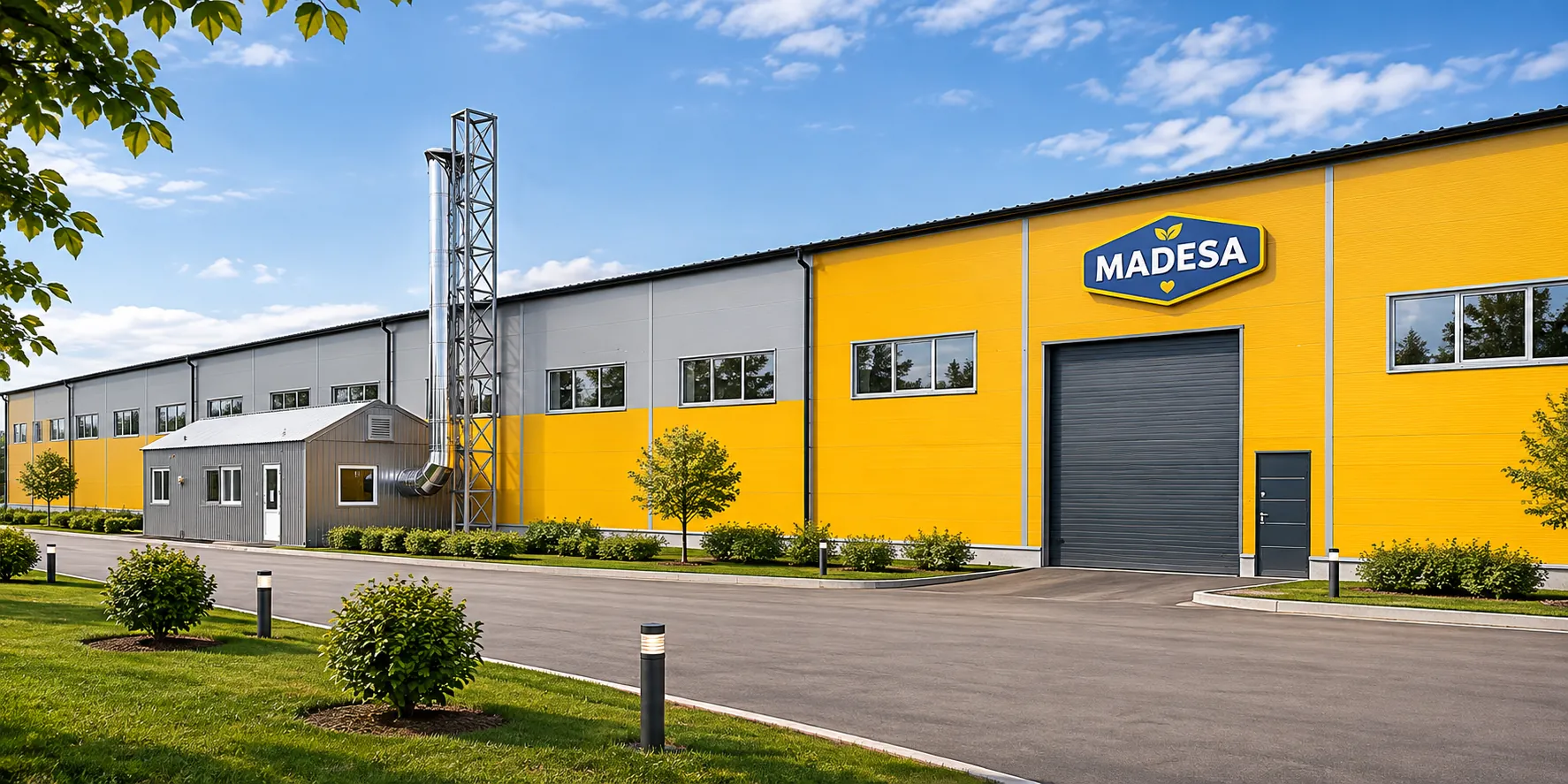
During Russia's full-scale invasion, the company's previous production site was destroyed. The team did not give up; it decided to rebuild. A new, modern food plant was built during the war in the village of Kodaky in Kyiv Oblast, and in 2026 production started there, with a wider range than before.
Today MADESA makes 35 products in five categories, sold under two brands, M.A.D.E.S.A and MIRASA. The legal entity has not changed: Private Enterprise “MADESA”, registration code (EDRPOU) 30905643. The company has one address, and it is the address of the plant: 85B Soborna Street, Kodaky, Kyiv Oblast, Ukraine.
That is the documented story. The rest of this article is about what it means for a buyer.
Why rebuild rather than stop
A production site is more than a building. It holds the equipment, the written procedures, the supplier relationships and the people who know how each product should look, taste and behave in the jar. Losing it forces a choice: close, hand production over to someone else's plant, or build again. MADESA chose to build again, and it did so while the war was still going on.
For a buyer, that choice matters in a practical way. A manufacturer that rebuilds its own production keeps control over how the product is made: the formulations, the heat treatment, the checks before a batch is released. That control is what a retailer or a distributor is really buying when it lists a product under the manufacturer's brand or under its own label.
A new plant is also designed around the products it will make, rather than an older building being adapted to them. The flow from raw materials to finished pallets, the separation of clean and less clean areas, the storage conditions: in a new building these can be planned from the start instead of retrofitted. They are exactly what an auditor looks at, and what a buyer can see with their own eyes on a visit.
One plant, one address
MADESA's production takes place at one plant, in Kodaky. Two origin facts are printed on our labels and are worth knowing for an importer's own documents: the tomato raw material for our tomato paste comes from Türkiye, and the pitted black and green olives are made in Türkiye.
One address simplifies a buyer's work in three ways. A supplier audit has one site to visit. Contracts, invoices and certificates name one legal entity, whose registration has not changed. And questions go to one team, by email at pp.madesa@ukr.net or by phone and WhatsApp on +380 50 749 51 75.
Certified management systems
MADESA's management systems are certified by the certification body of Ukrsertyfikatsiia, which is accredited by the National Accreditation Agency of Ukraine (NAAU, accreditation certificate No. 8O140). NAAU is a signatory of the IAF Multilateral Recognition Arrangement (IAF MLA), under which accredited certificates are recognised across member countries. Three certificates are in force:
- ISO 22000:2018 (DSTU ISO 22000:2019), food safety management, certificate No. FSMS.8O140.35-2024, valid 24.09.2024–23.09.2027;
- ISO 9001:2015 (DSTU EN ISO 9001:2018), quality management, certificate No. QMS.8O140.36-2024, valid 24.09.2024–23.09.2027;
- ISO 14001:2015 (DSTU ISO 14001:2015), environmental management, certificate No. EMS.8O140.17-2025, valid 14.03.2025–23.09.2027.
The scope covers processed and preserved fruit and vegetables, fillings for the food industry, sauces, condiments and spices, and wholesale trade in food, including warehousing and storage. A certificate is not a one-off event: continued conformity is checked through scheduled surveillance audits. Copies are on the quality page.
ISO 22000 and ISO 9001 tell a buyer how safety and quality are managed. ISO 14001 adds the environmental side: the standard asks a manufacturer to identify the environmental aspects of its operations, such as water, energy, waste and packaging, and to keep them under control with the same plan, do, check, act logic. For buyers who report on their own supply chains, that third certificate answers a question that is asked more and more often. For more on the first two, see ISO 22000 explained and ISO 22000 and ISO 9001 compared.
What the plant makes
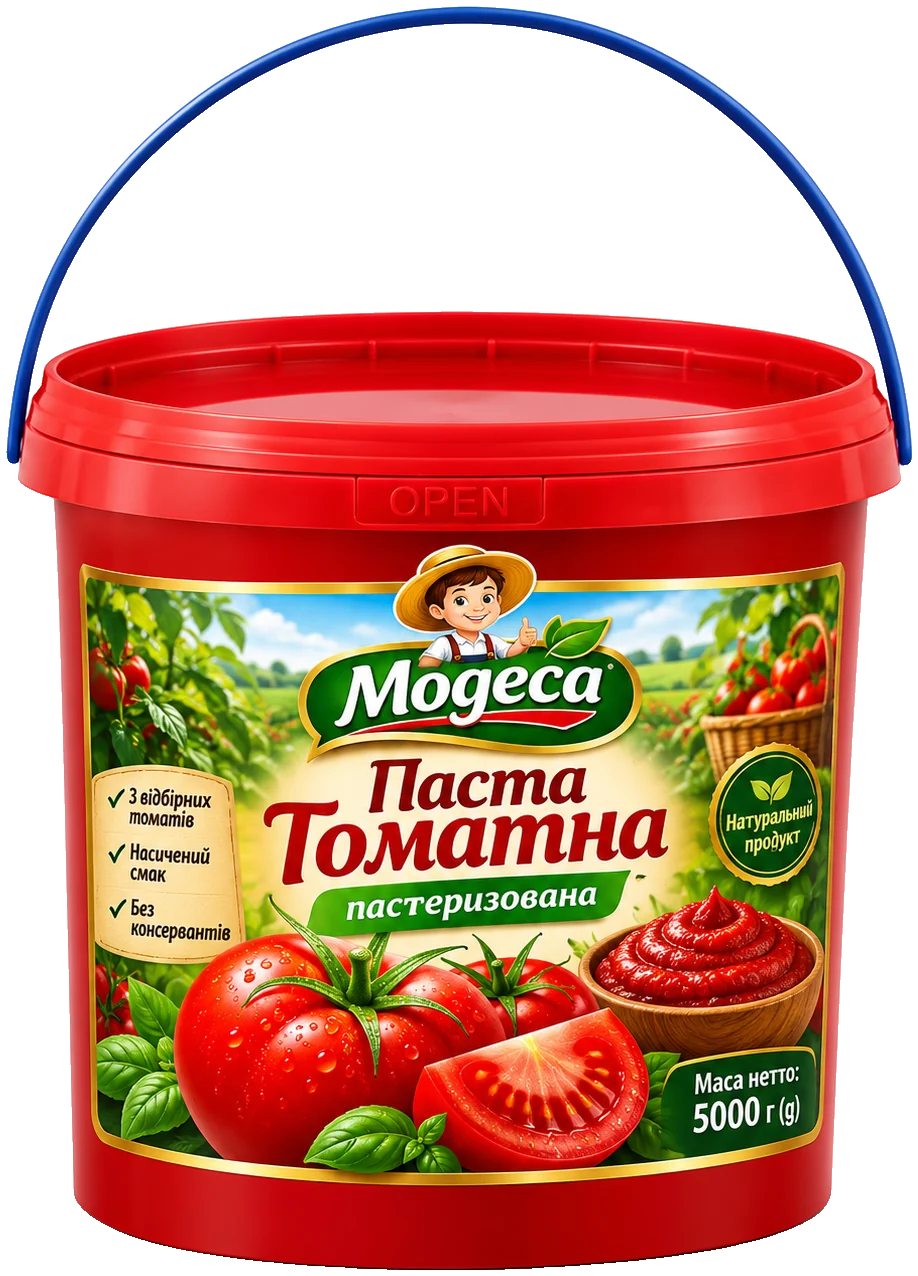
Most of the range is sterilised in sealed glass, which is why most of our products are made without added preservatives (see sterilisation without preservatives). Three products are the exception, and we say so: the 5 kg pasteurised tomato paste for food service contains ascorbic acid, and the pitted black and pitted green olives contain potassium sorbate. For four products new to the range (black and green olives with the stone, the aubergine ikra and the sweet and spicy mix), the full ingredient details are not yet published; ask us for the specification.
The five categories:
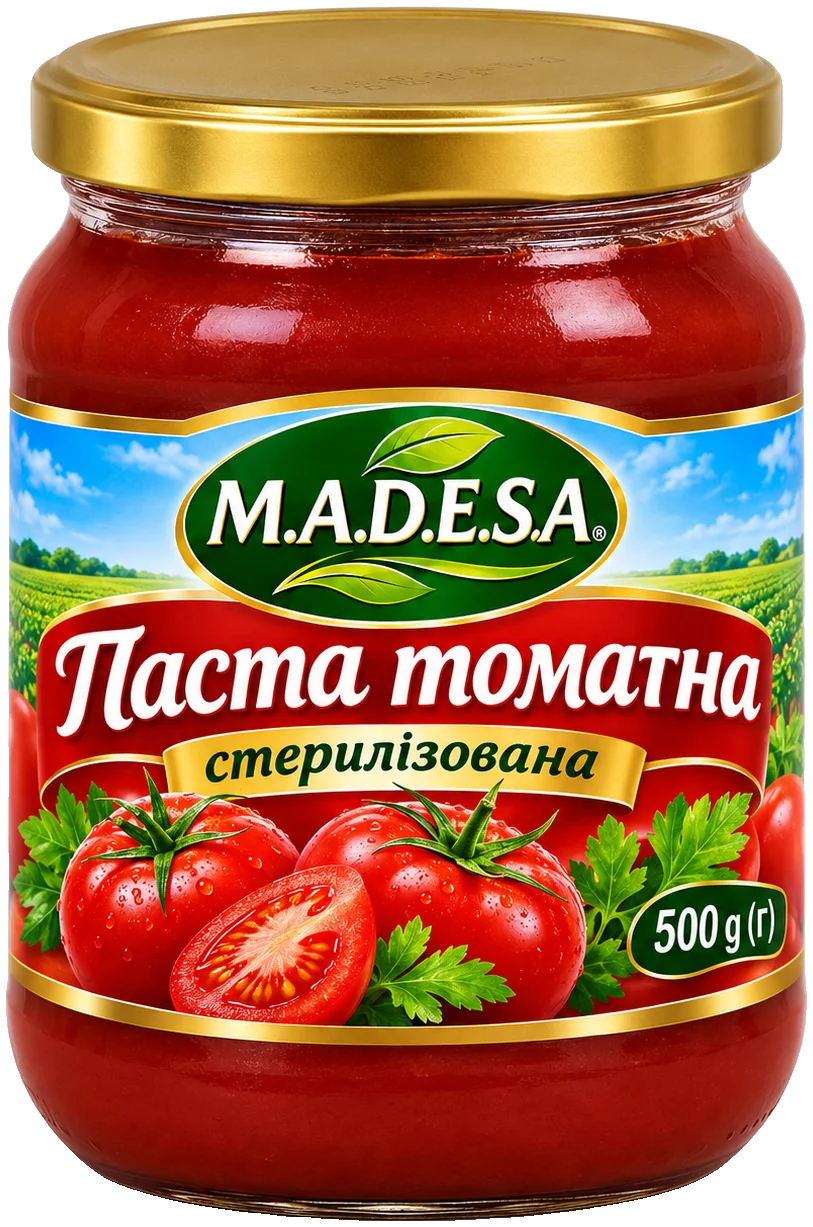
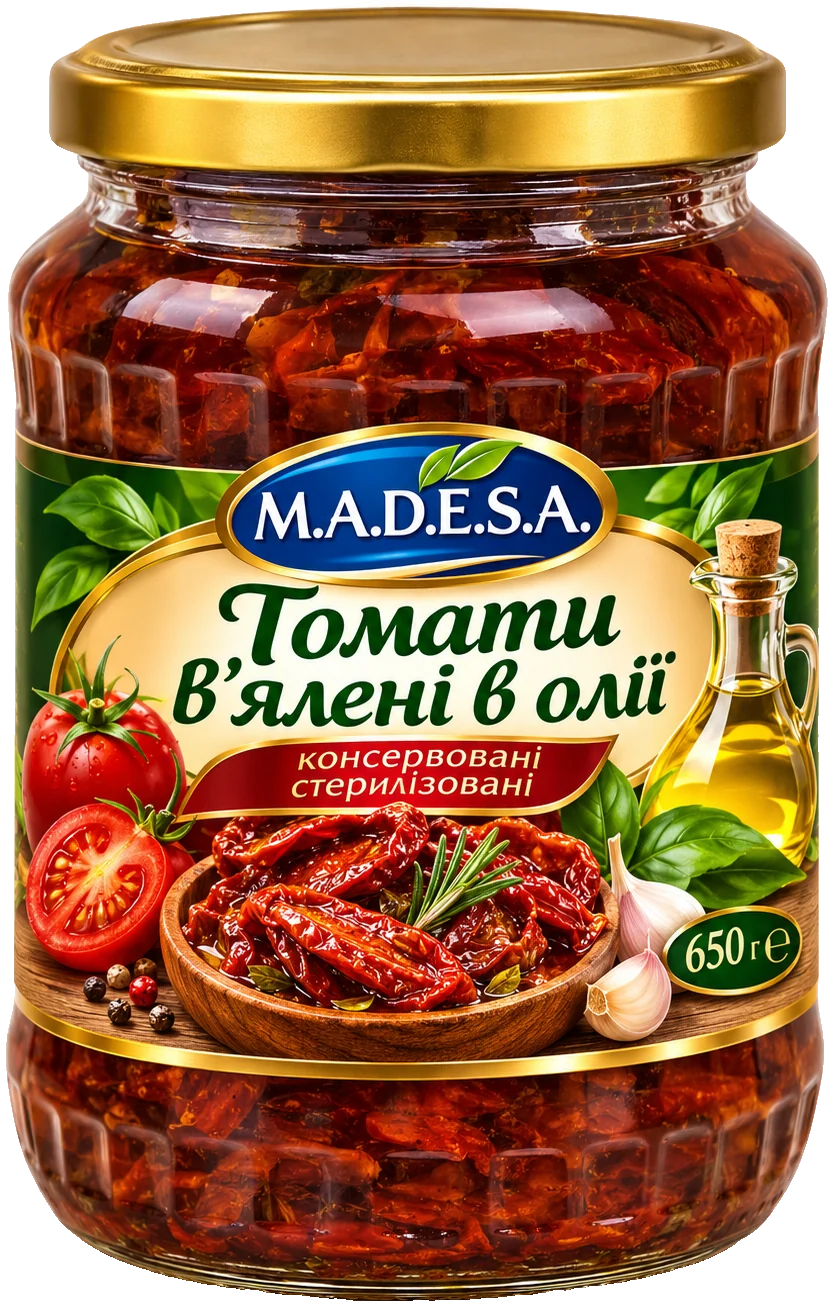
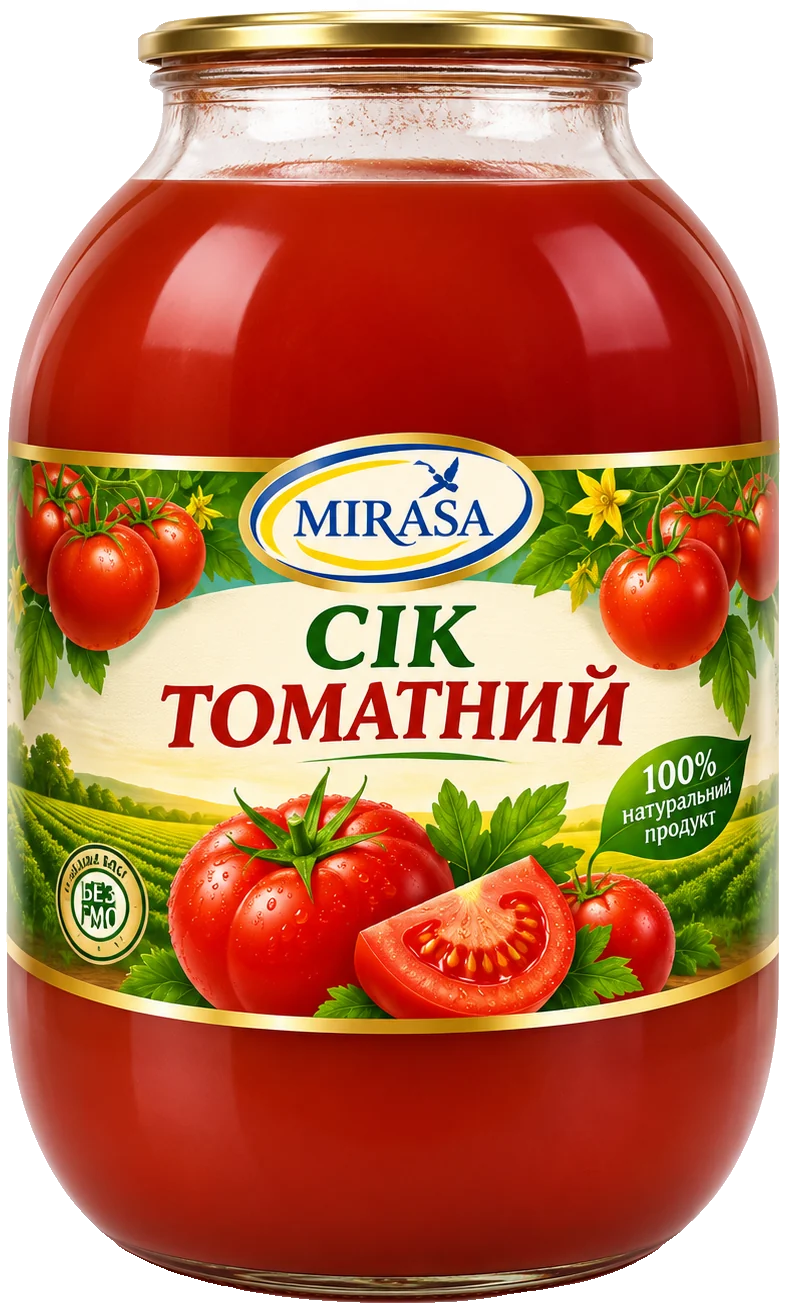
- Tomato Products: sterilised tomato paste in 500 g jars, pasteurised paste in 5 kg pails, dried tomatoes in oil, tomato juice in 3 kg jars and five tomato sauces in 485 g jars, among them the Ketchup sauce;
- Jams: plum, strawberry, apple, apricot and cherry, in 1.2 kg jars under the MIRASA brand;
- Olives: pitted black olives (1 kg), pitted green olives (470 g), and black and green olives with the stone, all under MIRASA;
- Appetisers & Salads: beans in sauce, courgette, sweet pepper and aubergine ikra, lecho, vegetable sauté, aubergines in adjika, hot adjika, Mexican fiesta, the sweet and spicy mix and the vegetable salad with red and green beans, sweetcorn and sweet pepper;
- Pickled & Preserved Vegetables: pickled tomatoes, gherkins and sliced courgettes in 3 kg jars, and button mushrooms in 1 kg jars.
Each product page lists the ingredients, the net weight and, where the label states them, the standard and the shelf life. The catalogue brings them together in one document.
Where it goes next
The direction is the one the company has set itself: to widen the range, to increase production capacity, to create new jobs, and to work with partners in Ukraine and abroad. We do not publish capacity figures or customer lists on this site; volumes, formats and delivery timing are agreed with each buyer directly.
If you are a distributor, a retail chain, a food-service operator or a brand looking for a private-label manufacturer, the business pages describe how we work, and an enquiry sent through the quote form goes straight to our team. The about page and the company details list the documented facts in one place.
Frequently asked questions
When and how did MADESA start?
In 2000, on the initiative of a woman who wanted to build her own business in food. During Russia's full-scale invasion the previous production site was destroyed; the company rebuilt, and production at its new plant in Kodaky, Kyiv Oblast, started in 2026.
Where does MADESA produce today?
At its new plant at 85B Soborna Street, Kodaky, Kyiv Oblast, Ukraine. The plant was built during the war, production started there in 2026, and it is the company's only address.
Has the legal entity changed with the new plant?
No. Contracts, invoices and certificates name the same legal entity, Private Enterprise “MADESA”, registration code (EDRPOU) 30905643.
Which management-system certificates does MADESA hold?
ISO 22000:2018 for food safety (No. FSMS.8O140.35-2024) and ISO 9001:2015 for quality (No. QMS.8O140.36-2024), both valid 24.09.2024–23.09.2027, and ISO 14001:2015 for environmental management (No. EMS.8O140.17-2025), valid 14.03.2025–23.09.2027. All three were issued by the certification body of Ukrsertyfikatsiia.
What does MADESA make today?
35 products in five categories (Tomato Products, Jams, Olives, Appetisers & Salads, Pickled & Preserved Vegetables) under the M.A.D.E.S.A and MIRASA brands. Most are sterilised in sealed glass and made without added preservatives.